
 EN
EN



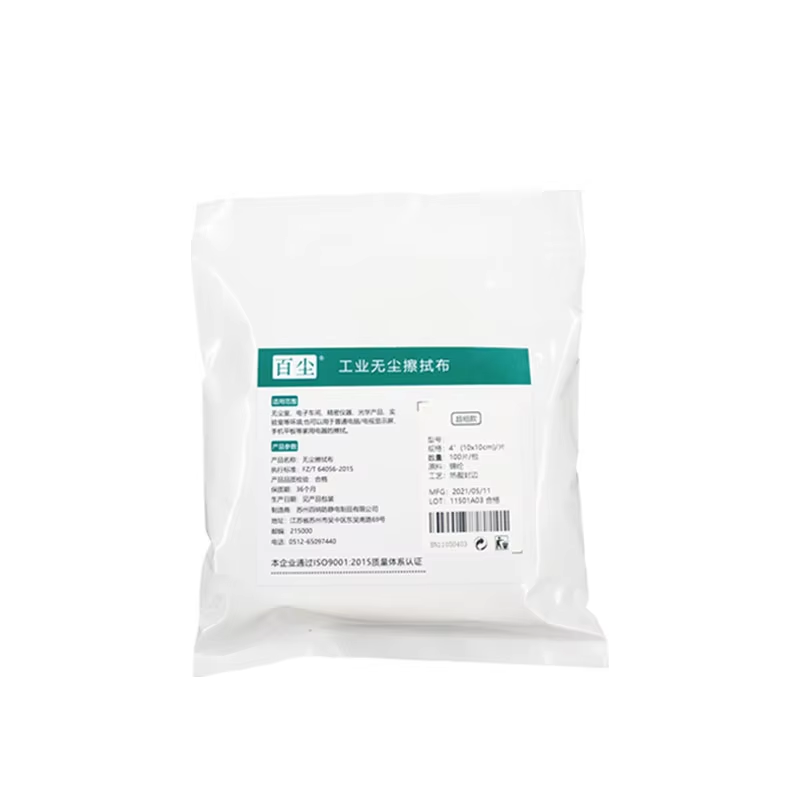
In controlled environments where contamination can compromise product quality and safety, selecting the right cleanroom wipes becomes a critical decision that impacts operational efficiency and compliance standards. These specialized cleaning tools serve as the frontline defense against particles, chemicals, and biological contaminants that threaten sterile manufacturing processes. Understanding the key evaluation criteria for cleanroom wipes ensures your facility maintains the highest standards of cleanliness while optimizing cost-effectiveness and performance outcomes.
Material Composition and Performance Characteristics
Fabric Construction Standards
The foundation of effective cleanroom wipes lies in their material composition, which directly influences absorption capacity, particle generation, and chemical compatibility. Polyester-based cleanroom wipes offer superior durability and low particle shedding properties, making them ideal for ISO Class 5 and higher environments. These synthetic materials resist tearing under stress while maintaining consistent performance across multiple cleaning cycles.
Microfiber technology has revolutionized cleanroom wipes by creating ultra-fine fibers that capture microscopic particles more effectively than traditional materials. The split-fiber construction increases surface area exponentially, enabling enhanced dirt and contaminate removal without requiring excessive cleaning solutions. This advanced fabric engineering reduces the risk of recontamination while extending the operational lifespan of each wipe.
Absorption and Retention Properties
Absorption capacity determines how efficiently cleanroom wipes can handle liquid spills, cleaning solvents, and residual moisture without compromising their structural integrity. High-quality cleanroom wipes demonstrate exceptional liquid retention, preventing dripping that could spread contamination across sensitive surfaces. The balance between absorption speed and retention capacity ensures optimal cleaning performance while maintaining workplace safety standards.
Edge-sealed construction prevents fiber migration and particle generation during use, which is essential for maintaining cleanroom classification requirements. Heat-sealed or ultrasonic-sealed edges eliminate loose threads that could become airborne contaminants, ensuring that the cleaning process itself does not introduce new contamination sources into the controlled environment.

Classification Compatibility and Environmental Standards
ISO Cleanroom Class Requirements
Different cleanroom classifications demand specific performance standards from cleaning materials, making it essential to match cleanroom wipes to your facility's operational requirements. ISO Class 3 through Class 8 environments each present unique challenges regarding particle counts, air changes, and contamination control protocols. Understanding these requirements helps facilities select appropriate wipes that support compliance without over-specifying unnecessarily expensive options.
Particle generation testing provides quantitative data about how cleanroom wipes perform under standardized conditions, including mechanical stress and solvent exposure. These tests measure both viable and non-viable particle release, ensuring that selected wipes meet or exceed the stringent requirements of pharmaceutical, semiconductor, and biotechnology manufacturing environments.
Chemical Compatibility Assessment
Cleanroom wipes must demonstrate compatibility with the full range of cleaning agents, disinfectants, and process chemicals used within specific manufacturing environments. Isopropyl alcohol, hydrogen peroxide, and specialized cleaning solvents can degrade certain materials, leading to performance degradation and potential contamination issues. Comprehensive chemical compatibility testing ensures long-term reliability and consistent cleaning effectiveness.
Extractable and leachable testing reveals potential contamination risks when cleanroom wipes interact with various solvents and cleaning solutions. This testing identifies trace compounds that might migrate from the wipe material into the cleaning solution, potentially compromising product quality or analytical results in sensitive applications such as pharmaceutical manufacturing or laboratory research.
Size Specifications and Packaging Considerations
Dimensional Optimization
Selecting the appropriate size for cleanroom wipes balances cleaning efficiency with material cost and waste reduction objectives. Standard dimensions ranging from 4x4 inches to 12x12 inches serve different applications, with smaller sizes ideal for precision cleaning tasks and larger options better suited for surface area coverage. The relationship between wipe size and cleaning task efficiency directly impacts both operational costs and cleaning effectiveness.
Custom sizing options allow facilities to optimize cleanroom wipes for specific equipment configurations, workspace layouts, and cleaning procedures. This customization reduces waste while ensuring complete coverage of critical surfaces, ultimately improving cleaning consistency and reducing the total cost of ownership for cleanroom maintenance programs.
Packaging and Contamination Control
Sterile packaging maintains the integrity of cleanroom wipes from manufacturing through end-use applications, preventing pre-contamination that could compromise cleaning effectiveness. Double-bagged packaging with gamma irradiation or ethylene oxide sterilization provides the highest level of contamination control for critical applications. The packaging design should facilitate easy dispensing while maintaining sterile conditions throughout the usage period.
Dispenser compatibility ensures seamless integration with existing cleanroom infrastructure while supporting efficient workflow management. Pop-up dispensing systems reduce handling time and minimize the risk of cross-contamination between wipes, while resealable packaging maintains product integrity for extended storage periods in controlled environments.
Quality Certifications and Validation Requirements
Manufacturing Standards Compliance
ISO 9001 certification demonstrates that cleanroom wipes manufacturers maintain consistent quality management systems throughout the production process. This certification ensures traceability, documentation, and continuous improvement practices that support reliable product performance. Additional certifications such as ISO 13485 for medical device applications provide further assurance of quality and regulatory compliance.
Good Manufacturing Practice compliance becomes essential when cleanroom wipes are used in pharmaceutical or medical device manufacturing environments. GMP-certified facilities follow strict protocols for raw material sourcing, production processes, and quality control testing that ensure consistent product performance and regulatory compliance across all batches.
Testing and Validation Documentation
Comprehensive testing documentation provides the technical foundation for validating cleanroom wipes performance in specific applications. Particle generation testing, absorption capacity measurements, and chemical compatibility studies should be readily available from manufacturers to support facility validation requirements. This documentation becomes critical during regulatory inspections and audit processes.
Change control procedures ensure that any modifications to cleanroom wipes specifications are properly evaluated and documented before implementation. These procedures protect against unexpected performance changes that could impact cleaning effectiveness or introduce new contamination risks into validated manufacturing processes.
Cost-Effectiveness and Sustainability Factors
Total Cost of Ownership Analysis
Beyond initial purchase price, the total cost of ownership for cleanroom wipes includes factors such as cleaning solution requirements, disposal costs, and labor efficiency impacts. High-performance cleanroom wipes that require fewer solution changes or demonstrate superior cleaning effectiveness may justify higher unit costs through reduced operational expenses and improved productivity outcomes.
Inventory management considerations include storage requirements, shelf life limitations, and minimum order quantities that affect cash flow and facility operations. Establishing optimal inventory levels balances cost efficiency with operational continuity, ensuring adequate supplies while minimizing carrying costs and obsolescence risks.
Environmental Impact Assessment
Sustainable cleanroom wipes options address growing environmental concerns while maintaining performance standards required for controlled manufacturing environments. Biodegradable materials and recyclable packaging reduce environmental impact without compromising cleaning effectiveness or contamination control requirements.
Life cycle assessment methodologies evaluate the complete environmental impact of cleanroom wipes from raw material extraction through end-of-life disposal. This comprehensive analysis helps facilities make informed decisions that balance environmental responsibility with operational requirements and cost considerations.
FAQ
How often should cleanroom wipes be replaced during extended cleaning procedures
The replacement frequency for cleanroom wipes depends on the contamination level, cleaning solution saturation, and specific cleaning protocols established for your facility. Generally, wipes should be replaced when they become visibly soiled, lose absorption capacity, or after cleaning a predetermined surface area as defined in your standard operating procedures. High-contamination areas may require more frequent wipe changes to prevent cross-contamination between surfaces.
Can the same cleanroom wipes be used across different ISO classification levels
While some high-performance cleanroom wipes may meet requirements for multiple ISO classes, it is generally recommended to use classification-specific products to ensure optimal performance and compliance. Lower classification environments typically allow more flexibility in wipe selection, but higher classes such as ISO 5 and above require wipes with documented low particle generation and specific material properties that may not be necessary for less stringent environments.
What storage conditions are required to maintain cleanroom wipes quality
Cleanroom wipes should be stored in controlled environmental conditions with stable temperature and humidity levels, typically between 15-25°C and 30-70% relative humidity. Storage areas must be clean and protected from contamination sources, with proper rotation procedures following first-in-first-out principles. Sterile packaged wipes require additional protection from physical damage that could compromise packaging integrity and sterility assurance.
How do you validate the effectiveness of cleanroom wipes for specific applications
Validation involves establishing cleaning protocols, conducting performance testing under actual use conditions, and documenting results that demonstrate consistent contamination removal. This process includes surface cleanliness verification using appropriate analytical methods, particle counting before and after cleaning, and microbiological testing when applicable. Regular revalidation ensures continued effectiveness as processes, equipment, or environmental conditions change over time.
Table of Contents
- Material Composition and Performance Characteristics
- Classification Compatibility and Environmental Standards
- Size Specifications and Packaging Considerations
- Quality Certifications and Validation Requirements
- Cost-Effectiveness and Sustainability Factors
-
FAQ
- How often should cleanroom wipes be replaced during extended cleaning procedures
- Can the same cleanroom wipes be used across different ISO classification levels
- What storage conditions are required to maintain cleanroom wipes quality
- How do you validate the effectiveness of cleanroom wipes for specific applications