
 EN
EN



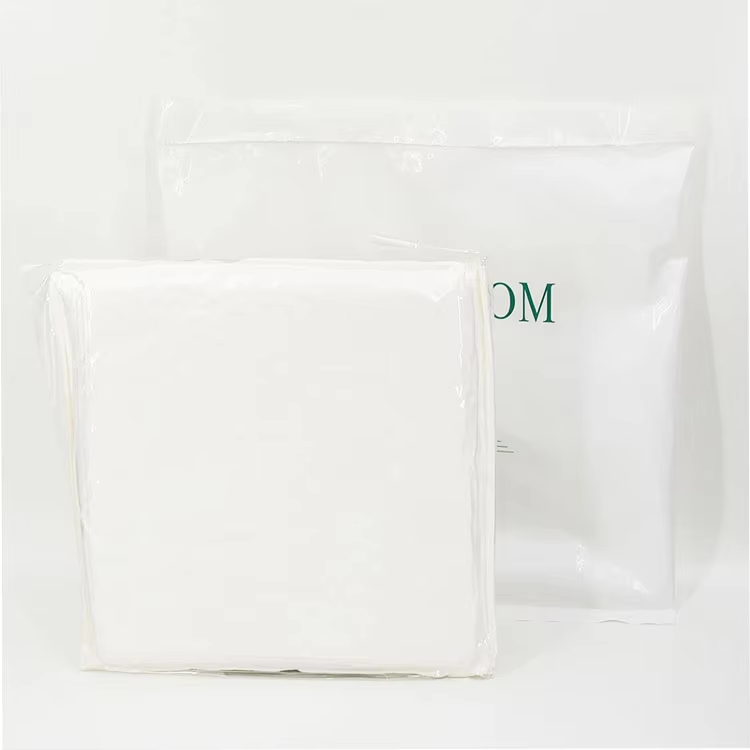
ISO-classified cleanrooms demand the highest standards of contamination control, where even microscopic particles can compromise critical processes. The selection of appropriate cleaning materials becomes paramount in maintaining these sterile environments. Cleanroom wipes represent a specialized category of cleaning materials engineered specifically for controlled environments, offering superior particle removal and contamination prevention compared to conventional cleaning cloths. These advanced cleaning solutions play a crucial role in pharmaceutical manufacturing, semiconductor fabrication, biotechnology research, and aerospace component assembly where environmental purity directly impacts product quality and operational success.
Understanding ISO Classification Standards and Cleaning Requirements
ISO 14644 Standards for Cleanroom Classification
ISO 14644 establishes the international framework for classifying cleanroom environments based on airborne particle concentrations. These standards define nine classes ranging from ISO 1 through ISO 9, with ISO 1 representing the most stringent cleanliness requirements. Each classification specifies maximum allowable particle counts per cubic meter for various particle sizes, creating a systematic approach to environmental control. Understanding these classifications helps facility managers select appropriate cleanroom wipes that align with specific contamination control objectives and regulatory compliance requirements.
The relationship between ISO classifications and cleaning protocols becomes evident when examining particle generation sources within controlled environments. Human operators, equipment surfaces, and material handling processes continuously introduce contaminants that require systematic removal. Cleanroom wipes must therefore meet stringent criteria for low particle generation, chemical compatibility, and absorption capacity to maintain the specified environmental conditions throughout operational cycles.
Contamination Sources in Controlled Environments
Controlled environments face contamination challenges from multiple sources that conventional cleaning methods cannot adequately address. Personnel movement generates skin cells, textile fibers, and cosmetic residues that accumulate on surfaces and become airborne through mechanical disturbance. Equipment operation produces metallic particles, lubricant residues, and static charge accumulation that attracts additional contaminants. Raw material handling introduces packaging debris, chemical residues, and cross-contamination between different product batches.
Surface contamination patterns vary significantly across different areas within cleanroom facilities, requiring tailored cleaning approaches for optimal results. High-traffic zones experience greater contamination loads and require more frequent cleaning cycles with specialized cleanroom wipes designed for heavy-duty applications. Critical process areas demand ultra-low particle generation materials that maintain surface integrity while removing submicron contaminants. Storage areas require cleaning solutions that prevent static buildup and chemical migration between stored materials.

Material Science Behind Cleanroom Wipe Performance
Synthetic Fiber Technologies and Construction Methods
Modern cleanroom wipes utilize advanced synthetic fiber technologies that deliver superior cleaning performance compared to natural fiber alternatives. Polyester microfibers engineered through specialized spinning processes create uniform fiber diameters and consistent surface textures that optimize particle capture efficiency. These synthetic materials resist chemical degradation, maintain dimensional stability under various environmental conditions, and generate minimal particulate matter during use. The precise control of fiber density and weave patterns enables manufacturers to customize absorption capacity, mechanical strength, and particle retention characteristics for specific applications.
Knitting and weaving techniques significantly influence the cleaning effectiveness and durability of cleanroom wipes. Ultrasonic cutting methods eliminate traditional sewn edges that can generate particles and harbor contaminants. Sealed edge construction prevents fiber shedding while maintaining fabric integrity throughout extended use cycles. These manufacturing innovations ensure that cleanroom wipes meet the demanding performance requirements of ISO-classified environments.
Chemical Compatibility and Solvent Resistance
Chemical compatibility represents a critical performance factor for cleanroom wipes used in pharmaceutical and biotechnology applications. The synthetic polymer construction of professional-grade cleanroom wipes provides excellent resistance to aggressive solvents, disinfectants, and cleaning agents commonly used in controlled environments. This chemical stability prevents material degradation that could introduce unwanted contaminants or compromise cleaning effectiveness. Testing protocols evaluate compatibility with isopropyl alcohol, hydrogen peroxide, quaternary ammonium compounds, and other sterilization agents to ensure consistent performance across diverse cleaning protocols.
Solvent absorption and retention properties directly impact cleaning efficiency and cost-effectiveness in cleanroom operations. High-quality cleanroom wipes demonstrate controlled absorption rates that optimize solvent utilization while preventing excessive saturation that could lead to dripping or uneven distribution. The capillary action within the fiber matrix ensures uniform solvent distribution across the wipe surface, enabling consistent cleaning results and minimizing waste generation. These performance characteristics translate into reduced material consumption and improved operational efficiency.
Particle Removal Mechanisms and Cleaning Efficiency
Electrostatic Charge Control and Particle Attraction
Electrostatic charge management plays a fundamental role in the particle removal effectiveness of cleanroom wipes. Static electricity generated through friction during cleaning operations can attract airborne particles to cleaned surfaces, negating the benefits of the cleaning process. Advanced cleanroom wipes incorporate antistatic treatments or conductive fibers that dissipate electrical charges and prevent particle recontamination. This electrostatic control becomes particularly important in semiconductor manufacturing and electronics assembly where static discharge can damage sensitive components.
The mechanism of particle attraction and retention involves multiple physical forces acting at the microscopic level. Van der Waals forces, electrostatic attraction, and mechanical entrapment work synergistically to capture particles ranging from visible debris to submicron contaminants. Cleanroom wipes with optimized fiber geometry create turbulent flow patterns that enhance particle capture while preventing particle migration back to cleaned surfaces. Understanding these mechanisms helps quality control personnel select appropriate wipe materials for specific contamination challenges.
Surface Interaction and Contamination Removal Patterns
Surface interaction between cleanroom wipes and various substrate materials determines cleaning effectiveness and potential surface damage. Different surface textures, chemical compositions, and mechanical properties require customized cleaning approaches to achieve optimal results. Smooth surfaces like stainless steel and glass respond well to low-abrasion cleanroom wipes that remove contaminants without creating microscopic scratches that could harbor future contamination. Textured surfaces require more aggressive cleaning action balanced against the risk of fiber shedding or mechanical damage.
Contamination removal patterns reveal the importance of proper wiping technique and material selection for maintaining cleanroom standards. Unidirectional wiping motions prevent cross-contamination and ensure systematic removal of particles from the cleaning area. The absorption capacity and particle retention characteristics of cleanroom wipes must align with contamination load expectations to prevent saturation that could redistribute contaminants. Regular monitoring of cleaning effectiveness through particle counting and surface sampling validates the performance of selected cleanroom wipes under actual operating conditions.
Application-Specific Benefits Across Industries
Pharmaceutical Manufacturing and GMP Compliance
Pharmaceutical manufacturing environments operate under strict Good Manufacturing Practice regulations that mandate validated cleaning procedures and materials. Cleanroom wipes used in drug production facilities must demonstrate compatibility with cleaning agents, disinfectants, and validation protocols required for regulatory compliance. The documentation trail for cleanroom wipes includes material specifications, testing certificates, and change control procedures that support FDA inspections and quality audits. This regulatory framework ensures that cleaning materials contribute to product safety and manufacturing consistency.
The validation process for cleanroom wipes in pharmaceutical applications involves extensive testing for extractable compounds, particle generation, and biological compatibility. These studies demonstrate that cleaning materials do not introduce contaminants that could compromise product purity or patient safety. Cleanroom wipes must also support cleaning validation studies that prove the effectiveness of cleaning procedures in removing active pharmaceutical ingredients and preventing cross-contamination between different products. The integration of appropriate cleanroom wipes into validated cleaning procedures provides confidence in manufacturing quality systems.
Semiconductor Fabrication and Precision Manufacturing
Semiconductor fabrication facilities represent some of the most demanding cleanroom environments where even single particles can cause device failures and yield losses. The economic impact of contamination in semiconductor manufacturing drives the selection of premium cleanroom wipes with exceptional particle removal capabilities and minimal particle generation characteristics. These facilities require cleaning materials that maintain their performance throughout extended use cycles while resisting degradation from aggressive chemicals used in wafer processing.
Precision manufacturing applications including optical component production, medical device assembly, and aerospace component fabrication benefit from the consistent performance of specialized cleanroom wipes. The elimination of surface contamination directly impacts product functionality, reliability, and service life in these critical applications. Quality control procedures rely on cleanroom wipes to maintain surface cleanliness between processing steps and prevent contamination that could compromise final product specifications. The investment in high-performance cleaning materials translates into improved yield rates and reduced rework costs.
Selection Criteria and Performance Evaluation
Technical Specifications and Quality Parameters
The selection of appropriate cleanroom wipes requires careful evaluation of technical specifications that align with specific application requirements and performance objectives. Key parameters include particle generation levels measured under standardized testing conditions, absorption capacity for various solvents and cleaning agents, and chemical compatibility with process materials and disinfectants. Mechanical properties such as tensile strength, abrasion resistance, and dimensional stability ensure consistent performance throughout the intended use cycle. These specifications provide the foundation for comparing different cleanroom wipe options and making informed selection decisions.
Quality parameters extend beyond basic performance characteristics to include manufacturing consistency, packaging integrity, and supply chain reliability. Batch-to-batch variation in cleanroom wipes can impact cleaning effectiveness and require adjustment of cleaning procedures. Statistical process control in manufacturing ensures that cleanroom wipes meet specified performance criteria with minimal variation. Packaging systems protect cleanroom wipes from contamination during storage and transportation while providing convenient dispensing methods that minimize waste and maintain product integrity.
Cost-Effectiveness Analysis and Return on Investment
Cost-effectiveness analysis for cleanroom wipes encompasses direct material costs, labor efficiency, and indirect benefits from improved contamination control. While premium cleanroom wipes may have higher unit costs compared to conventional alternatives, their superior performance often results in lower total cost of ownership through reduced cleaning time, improved cleaning effectiveness, and decreased rework requirements. The analysis must consider the cost of contamination events including product losses, facility shutdowns, and regulatory compliance issues that effective cleaning materials help prevent.
Return on investment calculations for cleanroom wipes include quantifiable benefits such as increased production yield, reduced cleaning labor, and extended equipment life. The prevention of contamination-related failures and the maintenance of regulatory compliance provide additional value that may not be immediately apparent in direct cost comparisons. Long-term facility performance improvements resulting from consistent use of appropriate cleanroom wipes create cumulative benefits that justify investment in premium cleaning materials for critical applications.
Implementation Best Practices and Optimization Strategies
Standard Operating Procedures and Training Requirements
Effective implementation of cleanroom wipes requires comprehensive standard operating procedures that define proper handling, storage, and usage techniques. These procedures must specify the type and quantity of cleanroom wipes for different cleaning tasks, appropriate cleaning agents and concentrations, and prescribed wiping patterns for various surface types. Training programs ensure that personnel understand the critical relationship between cleaning technique and contamination control effectiveness. Regular assessment of cleaning procedure compliance through observation and surface monitoring validates that cleanroom wipes achieve their intended performance objectives.
Documentation requirements for cleanroom wipe usage include batch tracking, inventory management, and performance monitoring systems that support quality management objectives. Change control procedures ensure that any modifications to cleaning materials or procedures undergo appropriate evaluation and approval before implementation. The integration of cleanroom wipes into overall facility contamination control strategies requires coordination between operations, quality assurance, and facility management teams to optimize performance across all functional areas.
Monitoring and Continuous Improvement Programs
Monitoring programs for cleanroom wipe performance include regular assessment of cleaning effectiveness through particle counting, surface sampling, and contamination trend analysis. These monitoring activities provide objective data on cleaning performance and identify opportunities for improvement in material selection or procedure optimization. Continuous improvement programs utilize performance data to refine cleaning protocols, evaluate new cleaning materials, and enhance overall contamination control effectiveness. The feedback loop between monitoring results and procedure refinement ensures that cleanroom wipes continue to meet evolving facility requirements.
Performance benchmarking against industry standards and peer facilities provides context for evaluating cleanroom wipe effectiveness and identifying best practices for adoption. Collaboration with suppliers enables access to new technologies and materials that could enhance cleaning performance or reduce operational costs. The systematic approach to cleanroom wipe evaluation and optimization creates a foundation for sustained improvement in facility cleanliness and contamination control effectiveness.
FAQ
What makes cleanroom wipes different from regular cleaning cloths?
Cleanroom wipes are specifically engineered for controlled environments with ultra-low particle generation, synthetic fiber construction, and sealed edge processing that prevents contamination. Unlike regular cleaning cloths, they undergo specialized manufacturing processes and testing to ensure compatibility with aggressive chemicals and maintain performance under stringent cleanliness requirements. The materials and construction methods used in cleanroom wipes eliminate common contamination sources found in conventional cleaning materials.
How often should cleanroom wipes be replaced during cleaning operations?
The replacement frequency for cleanroom wipes depends on contamination load, surface area being cleaned, and specific facility requirements. Generally, cleanroom wipes should be replaced when they become visibly soiled, reach saturation capacity, or after cleaning a predetermined surface area as specified in facility procedures. High-contamination areas may require more frequent wipe changes to prevent cross-contamination and maintain cleaning effectiveness throughout the cleaning cycle.
Can cleanroom wipes be used with all types of disinfectants and solvents?
While high-quality cleanroom wipes demonstrate broad chemical compatibility, specific compatibility should be verified for each combination of wipe material and chemical agent. Most professional-grade cleanroom wipes work effectively with isopropyl alcohol, hydrogen peroxide, and quaternary ammonium compounds commonly used in cleanroom environments. However, aggressive solvents or highly concentrated chemicals may require specialized wipe materials designed for specific chemical resistance requirements.
What role do cleanroom wipes play in maintaining ISO classification compliance?
Cleanroom wipes are essential components of contamination control systems that maintain ISO classification compliance by systematically removing particles and contaminants from surfaces. Their low particle generation characteristics prevent introduction of additional contamination while their effective particle removal capabilities help facilities maintain required cleanliness levels. Regular use of appropriate cleanroom wipes as part of validated cleaning procedures supports continuous compliance with ISO 14644 standards and regulatory requirements.
Table of Contents
- Understanding ISO Classification Standards and Cleaning Requirements
- Material Science Behind Cleanroom Wipe Performance
- Particle Removal Mechanisms and Cleaning Efficiency
- Application-Specific Benefits Across Industries
- Selection Criteria and Performance Evaluation
- Implementation Best Practices and Optimization Strategies
- FAQ