
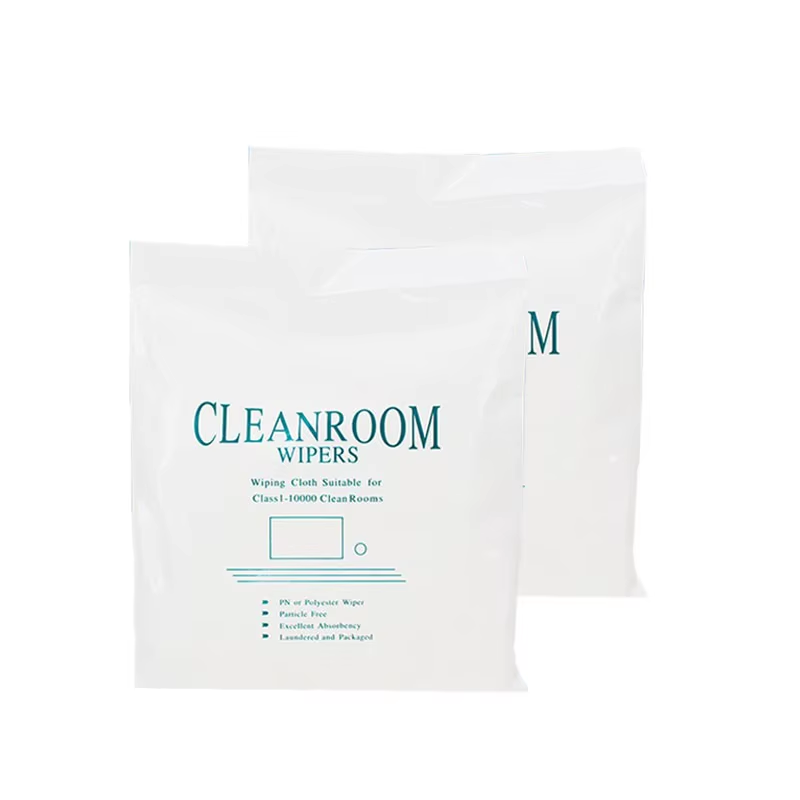
In today's precision manufacturing environments, maintaining contamination-free conditions is absolutely critical for product quality and regulatory compliance. Electronics and pharmaceutical production facilities rely heavily on specialized cleaning materials that meet stringent cleanliness standards. Among these essential materials, cleanroom wipes stand out as indispensable tools for maintaining the sterile conditions required in controlled environments. These specialized wipes are engineered to remove contaminants without introducing new particles or residues that could compromise sensitive manufacturing processes.

The semiconductor industry, pharmaceutical manufacturing, and biotechnology sectors have increasingly stringent requirements for contamination control. Traditional cleaning cloths and paper towels simply cannot meet the exacting standards demanded by these industries. Cleanroom wipes are specifically manufactured using materials and processes that minimize particle generation while maximizing cleaning efficiency. Their unique construction ensures that they capture and retain contaminants rather than redistributing them across surfaces, making them essential for maintaining the integrity of cleanroom environments.
Understanding the critical role these specialized cleaning tools play in modern manufacturing helps explain why facilities invest significantly in high-quality cleaning protocols. The cost of contamination in electronics or pharmaceutical production can be astronomical, ranging from product recalls to complete batch failures. By implementing proper cleaning procedures with appropriate cleanroom wipes, manufacturers protect their investments while ensuring consistent product quality that meets regulatory standards and customer expectations.
Understanding Cleanroom Classifications and Contamination Control
ISO Classification Standards and Their Impact
Cleanrooms are classified according to International Organization for Standardization standards that specify the maximum allowable particle concentrations per cubic meter of air. These classifications range from ISO Class 1, the most stringent, to ISO Class 9, with each class representing a tenfold increase in allowable particle concentration. Electronics manufacturing typically requires ISO Class 5 to 7 environments, while pharmaceutical production often demands even stricter ISO Class 4 to 6 conditions. The selection of appropriate cleanroom wipes must align with these classification requirements to maintain compliance.
Each cleanroom class demands specific protocols for material introduction, personnel behavior, and cleaning procedures. Cleanroom wipes used in higher classification environments must undergo rigorous testing to verify their particle generation characteristics. These tests measure the number and size of particles released during normal wiping motions, ensuring that the cleaning process does not compromise the controlled environment. Manufacturers of high-grade cleanroom wipes provide detailed particle generation data to help facilities select products that maintain their required cleanliness levels.
The relationship between cleanroom classification and cleaning material selection extends beyond particle generation to include chemical compatibility and residue levels. Higher classification cleanrooms often require wipes that have been pre-cleaned and packaged in controlled environments to eliminate any potential contamination sources. This careful attention to material selection and handling procedures ensures that cleaning activities support rather than undermine the contamination control objectives of the facility.
Particle Generation and Surface Contamination Risks
Surface contamination in cleanroom environments can originate from multiple sources, including personnel, equipment, and cleaning materials themselves. Conventional cleaning cloths made from cotton or other natural fibers continuously shed microscopic particles that can settle on critical surfaces and compromise product quality. These particles can interfere with electronic circuits, contaminate pharmaceutical products, or create defects in precision manufacturing processes. Cleanroom wipes are specifically engineered to minimize particle generation while maximizing contaminant removal efficiency.
The size and composition of particles generated during cleaning activities directly impact their potential for causing contamination issues. Particles smaller than 0.5 micrometers can remain airborne for extended periods, potentially reaching sensitive areas far from the original cleaning location. Larger particles tend to settle more quickly but can create localized contamination hotspots. High-quality cleanroom wipes are designed to capture particles across the entire size spectrum while generating minimal additional particulates during use.
Advanced manufacturing processes in electronics and pharmaceuticals are particularly sensitive to ionic contamination, which occurs when cleaning materials leave behind charged particles or chemical residues. These contaminants can interfere with electronic functions, catalyze unwanted chemical reactions, or provide nucleation sites for crystal formation in pharmaceutical products. Cleanroom wipes undergo extensive testing to verify their ionic purity and ensure they do not introduce problematic residues during cleaning operations.
Material Science and Construction Technologies
Synthetic Fiber Advantages in Controlled Environments
Modern cleanroom wipes utilize advanced synthetic materials that offer superior performance compared to traditional natural fibers. Polyester and polypropylene are commonly used because they can be manufactured with precise control over fiber characteristics, including diameter, length, and surface properties. These synthetic materials do not shed fibers like cotton or other natural materials, making them ideal for maintaining the particle count requirements of controlled environments. The consistent manufacturing process ensures that each batch of cleanroom wipes meets stringent quality specifications.
Microfiber technology represents a significant advancement in cleaning material design, utilizing fibers that are significantly smaller than traditional materials. These ultra-fine fibers create an enormous surface area relative to the wipe's overall size, dramatically increasing their ability to capture and retain small particles and contaminants. The electrostatic properties of properly manufactured synthetic microfibers enhance their cleaning effectiveness by attracting and holding particles that might otherwise escape during cleaning operations.
Chemical resistance is another crucial advantage of synthetic fiber construction in cleanroom applications. Electronics and pharmaceutical manufacturing often require cleaning with aggressive solvents or disinfectants that would damage natural fiber materials. High-quality synthetic cleanroom wipes maintain their structural integrity and cleaning performance even when exposed to isopropyl alcohol, acetone, and other commonly used cleaning chemicals. This chemical compatibility ensures consistent cleaning results while extending the useful life of the cleaning materials.
Weaving Patterns and Edge Sealing Techniques
The construction method used to create cleanroom wipes significantly impacts their performance characteristics and suitability for different applications. Knitted constructions offer superior absorbency and flexibility, making them ideal for cleaning irregular surfaces and capturing liquid contaminants. Woven constructions provide greater durability and dimensional stability, which is important for applications requiring consistent wiping pressure or repeated use. The choice between knitted and woven constructions depends on the specific cleaning requirements and contamination control objectives of the application.
Edge sealing technology prevents fiber shedding from the perimeter of cleanroom wipes, which is often the primary source of particle generation in lower-quality products. Laser cutting and ultrasonic sealing create clean, sealed edges that eliminate loose fibers while maintaining the wipe's structural integrity. Heat sealing techniques can also be employed, though they require careful control to avoid creating rigid edges that might scratch sensitive surfaces. The selection of appropriate edge sealing methods depends on the material composition and intended application requirements.
Advanced manufacturing techniques allow for the creation of specialized surface textures that enhance cleaning performance for specific applications. Smooth surfaces are ideal for removing particles from delicate electronic components, while textured surfaces provide better mechanical action for removing stubborn residues. Some cleanroom wipes incorporate both smooth and textured areas within the same product, providing versatility for different cleaning tasks while maintaining the low particle generation characteristics required for cleanroom use.
Applications in Electronics Manufacturing
Semiconductor Fabrication Requirements
Semiconductor manufacturing represents one of the most demanding applications for cleanroom wipes, with some processes requiring ISO Class 1 cleanroom conditions. The microscopic scale of modern semiconductor devices means that even submicron particles can cause yield losses or device failures. Cleanroom wipes used in semiconductor fabrication must meet extremely stringent particle generation specifications while providing effective cleaning of photomasks, wafers, and processing equipment. The economic impact of contamination in this industry drives continuous innovation in cleaning material technology.
Wafer cleaning procedures require cleanroom wipes that can remove photoresist residues, metallic particles, and organic contaminants without scratching the delicate silicon surfaces. The cleaning process must be compatible with the various chemicals used in semiconductor processing, including acids, bases, and organic solvents. Specialized cleanroom wipes designed for semiconductor applications undergo extensive testing to verify their compatibility with these aggressive chemicals while maintaining their cleaning effectiveness and low particle generation characteristics.
The trend toward smaller feature sizes in semiconductor devices has increased the importance of molecular-level contamination control. Traditional cleaning methods may leave behind trace amounts of cleaning agents or atmospheric contaminants that can interfere with subsequent processing steps. High-purity cleanroom wipes are manufactured and packaged in controlled environments to minimize the introduction of molecular contaminants, ensuring that cleaning procedures support the stringent purity requirements of advanced semiconductor manufacturing.
PCB Assembly and Component Handling
Printed circuit board manufacturing and assembly operations require cleanroom wipes that can effectively remove flux residues, solder paste, and other processing materials while protecting delicate electronic components. The cleaning process must remove potentially corrosive residues that could cause long-term reliability issues while avoiding damage to sensitive components or circuit traces. Cleanroom wipes designed for PCB applications balance aggressive cleaning action with gentle handling characteristics to meet these competing requirements.
Component handling procedures in electronics assembly often require anti-static properties in cleaning materials to prevent electrostatic discharge damage to sensitive semiconductors. Specialized cleanroom wipes incorporate anti-static treatments or conductive fibers to safely dissipate static charges while maintaining their primary cleaning functions. These products must undergo rigorous testing to verify their electrical properties and ensure they provide adequate protection for sensitive electronic components.
The miniaturization of electronic components has created new challenges for cleaning procedures, requiring cleanroom wipes with enhanced precision and control characteristics. Ultra-fine microfiber constructions allow for cleaning in tight spaces and around delicate components without causing damage. The consistent performance of high-quality cleanroom wipes ensures reliable cleaning results across different operators and production shifts, supporting the quality control objectives of electronics manufacturing operations.
Pharmaceutical and Biotechnology Applications
Sterile Manufacturing Environment Maintenance
Pharmaceutical manufacturing facilities must maintain sterile conditions to ensure product safety and regulatory compliance, making the selection of appropriate cleaning materials critically important. Cleanroom wipes used in pharmaceutical applications must be compatible with sterilization processes such as gamma irradiation or ethylene oxide treatment while maintaining their cleaning effectiveness and structural integrity. The validation of cleaning procedures requires extensive documentation demonstrating that cleanroom wipes do not introduce contaminants or interfere with product quality.
Aseptic processing areas in pharmaceutical manufacturing demand cleanroom wipes that have been pre-sterilized and packaged in validated sterile packaging. These products must maintain their sterility until the point of use while providing effective cleaning of surfaces, equipment, and personnel protective equipment. The double-bagging procedures commonly used in pharmaceutical cleanrooms require packaging designs that support contamination-free transfer into the controlled environment.
Regulatory agencies such as the FDA and EMA have specific requirements for cleaning validation in pharmaceutical manufacturing, including detailed documentation of cleaning materials and procedures. Cleanroom wipes used in these environments must be supported by comprehensive technical documentation, including particle generation data, chemical compatibility information, and sterility validation studies. This documentation enables pharmaceutical manufacturers to demonstrate compliance with regulatory requirements and support their cleaning validation protocols.
Laboratory and Research Facility Requirements
Research and development laboratories in pharmaceutical and biotechnology companies require cleanroom wipes that can handle a wide variety of chemicals and biological materials while maintaining contamination control standards. The diverse nature of laboratory work demands cleaning materials that are compatible with everything from aggressive organic solvents to biological growth media. Cleanroom wipes designed for laboratory use must demonstrate broad chemical compatibility while maintaining their cleaning effectiveness across this wide range of applications.
Cell culture and tissue engineering applications require cleanroom wipes that will not introduce cytotoxic materials or other substances that could interfere with biological processes. These applications often require documentation demonstrating that cleaning materials have been tested for biological compatibility and will not adversely affect sensitive biological systems. The validation process for biological applications is particularly rigorous, requiring extensive testing to demonstrate safety for use around living cells and tissues.
Analytical laboratories require cleanroom wipes that will not interfere with sensitive analytical methods or introduce contaminants that could affect test results. Trace metal analysis, for example, requires cleaning materials with extremely low metal content to avoid false positive results. High-purity cleanroom wipes designed for analytical applications undergo specialized testing to verify their suitability for use in environments where contamination levels must be measured in parts per billion or lower.
Selection Criteria and Performance Specifications
Material Compatibility and Chemical Resistance
The selection of appropriate cleanroom wipes requires careful consideration of the chemicals and solvents used in specific manufacturing processes. Different synthetic materials exhibit varying degrees of compatibility with common cleaning agents, and the wrong choice can result in material degradation, reduced cleaning effectiveness, or the introduction of contaminants. Polyester-based cleanroom wipes generally offer excellent compatibility with alcohols and mild solvents, while specialized materials may be required for applications involving aggressive acids or bases.
Chemical compatibility testing involves exposing cleanroom wipes to representative cleaning solutions under conditions that simulate actual use, including temperature, concentration, and contact time variables. These tests evaluate changes in material properties such as tensile strength, particle generation, and residue levels that could affect cleaning performance. Comprehensive chemical compatibility data enables users to select cleanroom wipes that will maintain their performance characteristics throughout their intended service life.
The interaction between cleaning chemicals and cleanroom wipe materials can sometimes produce unexpected results, including the formation of reaction products that could contaminate surfaces or interfere with manufacturing processes. Advanced testing protocols evaluate not only the stability of the cleaning material but also the potential for chemical interactions that could compromise cleaning effectiveness or introduce new contaminants. This comprehensive approach to compatibility assessment ensures that cleanroom wipes will perform reliably in their intended applications.
Absorbency and Particle Capture Efficiency
The absorbency characteristics of cleanroom wipes directly impact their cleaning effectiveness and operational efficiency. High absorbency allows for the capture and retention of larger volumes of liquid contaminants, reducing the number of wipes required for cleaning operations and minimizing waste generation. However, absorbency must be balanced against other performance requirements such as particle generation and chemical compatibility to ensure optimal overall performance.
Particle capture efficiency represents a critical performance parameter for cleanroom wipes, as their primary function is to remove rather than redistribute contaminants. Advanced testing methods evaluate the ability of different wipe materials and constructions to capture particles of various sizes under standardized conditions. These tests provide quantitative data that enables users to select cleanroom wipes with optimal particle capture characteristics for their specific contamination control requirements.
The relationship between fiber structure and cleaning performance is complex, with factors such as fiber diameter, surface area, and electrostatic properties all contributing to overall effectiveness. Microfiber constructions generally provide superior particle capture efficiency due to their increased surface area and enhanced electrostatic attraction properties. However, the specific requirements of different applications may favor other characteristics such as chemical resistance or mechanical durability, requiring careful evaluation of the complete performance profile.
Quality Assurance and Testing Standards
Industry Testing Protocols and Certifications
Quality assurance for cleanroom wipes involves comprehensive testing protocols that evaluate all aspects of performance relevant to contamination control applications. These protocols typically include particle generation testing using standardized methods such as IEST-RP-004, which measures the number and size distribution of particles generated during simulated wiping motions. Additional tests evaluate chemical purity, absorbency, tensile strength, and other performance characteristics that affect cleaning effectiveness and operational reliability.
Certification programs provide third-party verification that cleanroom wipes meet specific industry standards and performance requirements. Organizations such as the Institute of Environmental Sciences and Technology (IEST) and ASTM International maintain standards that define testing methods and performance criteria for cleanroom materials. Products that meet these standards can be certified as compliant, providing users with confidence in their performance and suitability for cleanroom applications.
Batch-to-batch consistency represents a critical quality requirement for cleanroom wipes, as variations in performance characteristics could compromise contamination control protocols. Statistical process control methods are employed to monitor key performance parameters and ensure that each production lot meets established specifications. This consistency is particularly important in regulated industries such as pharmaceuticals, where cleaning validation protocols require documented evidence of material performance reliability.
Traceability and Documentation Requirements
Regulatory compliance in pharmaceutical and medical device manufacturing requires comprehensive documentation and traceability for all materials used in production, including cleanroom wipes. This documentation must include detailed information about material composition, manufacturing processes, quality control testing results, and storage conditions. The level of documentation required varies depending on the specific application and regulatory requirements, but generally includes batch records, certificates of analysis, and material safety data sheets.
Change control procedures ensure that any modifications to cleanroom wipe specifications or manufacturing processes are properly evaluated and documented before implementation. These procedures protect against unintended changes that could compromise cleaning effectiveness or contamination control performance. Users must be notified of any significant changes and given the opportunity to revalidate their cleaning procedures if necessary to maintain regulatory compliance.
Supply chain management for cleanroom wipes requires careful attention to storage and handling conditions that could affect product performance. Temperature, humidity, and contamination exposure during shipping and storage can impact the cleaning effectiveness and particle generation characteristics of these materials. Proper packaging and storage protocols ensure that cleanroom wipes maintain their specified performance characteristics from manufacturing through end use.
FAQ
What makes cleanroom wipes different from regular cleaning cloths
Cleanroom wipes are specifically engineered for use in controlled environments where contamination control is critical. Unlike regular cleaning cloths made from cotton or other natural fibers, cleanroom wipes utilize synthetic materials such as polyester or polypropylene that generate minimal particles during use. They undergo specialized manufacturing processes including edge sealing and controlled washing to remove any potential contaminants before packaging. The materials are tested for particle generation, chemical purity, and absorbency to ensure they meet the stringent requirements of cleanroom applications.
How do I select the right cleanroom wipes for my specific application
Selecting appropriate cleanroom wipes requires consideration of several factors including your cleanroom classification, the types of contaminants you need to remove, and the cleaning chemicals you plan to use. Start by determining your cleanroom's ISO classification to understand the particle generation requirements for your wipes. Consider the chemical compatibility requirements based on your cleaning solvents and processes. Evaluate the absorbency needs for liquid spills or cleaning solutions, and determine whether you need special features such as anti-static properties or sterile packaging for pharmaceutical applications.
Can cleanroom wipes be reused or are they single-use only
Most cleanroom wipes are designed for single-use applications to prevent cross-contamination and maintain cleaning effectiveness. Reusing wipes can redistribute contaminants rather than removing them, potentially compromising the cleanliness of your controlled environment. However, some heavy-duty cleanroom wipes designed for equipment cleaning may be suitable for limited reuse if properly laundered using validated cleaning procedures. The decision to reuse wipes should be based on your contamination control requirements, regulatory obligations, and risk assessment of potential contamination issues.
What storage conditions are required to maintain cleanroom wipe performance
Proper storage conditions are essential for maintaining the performance characteristics of cleanroom wipes. Store wipes in their original packaging in a clean, dry environment away from sources of contamination such as dust, chemicals, or high-traffic areas. Temperature and humidity control help prevent moisture absorption that could promote microbial growth or affect material properties. Sterile wipes require special attention to packaging integrity and expiration dates. Follow manufacturer recommendations for storage conditions and shelf life, and implement first-in-first-out inventory rotation to ensure you use the oldest stock first while maintaining product freshness.