
 EN
EN



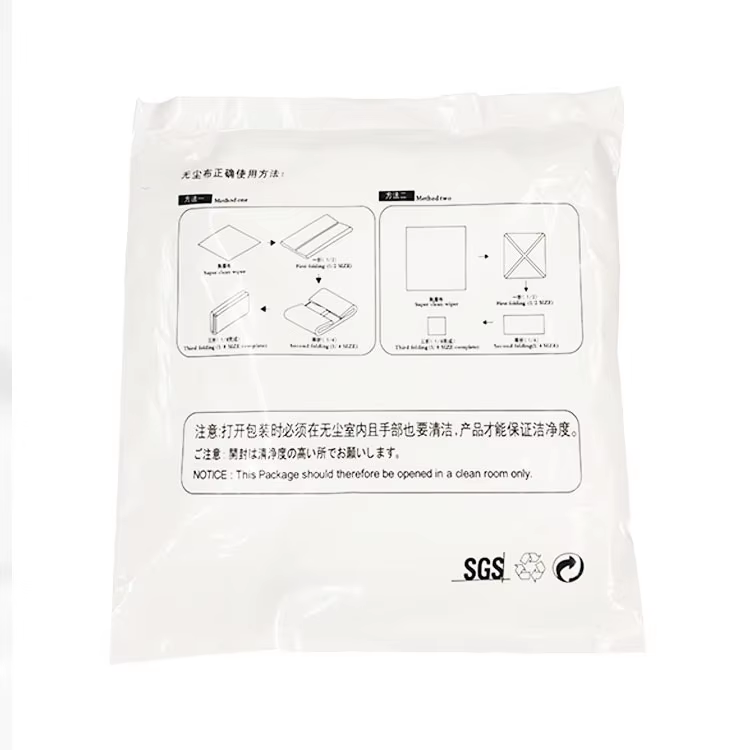
Manufacturing facilities across diverse industries depend on maintaining spotless environments to ensure product quality and operational efficiency. The selection of appropriate cleaning materials directly impacts production outcomes, contamination control, and regulatory compliance. An industrial wipe serves as a critical component in systematic cleaning protocols, offering specialized properties that traditional cleaning materials cannot match. These advanced cleaning solutions provide consistent performance characteristics essential for maintaining sterile conditions in sensitive manufacturing environments.
Understanding Industrial Wipe Technology and Composition
Material Engineering for Enhanced Performance
Modern industrial wipe manufacturing incorporates sophisticated fiber technology designed to optimize cleaning performance across demanding applications. Polyester-based compositions deliver exceptional durability while maintaining lint-free characteristics essential for precision cleaning tasks. The molecular structure of these synthetic fibers creates superior absorption capacity compared to conventional cotton alternatives. Advanced weaving techniques ensure consistent density throughout each industrial wipe, eliminating weak points that could compromise cleaning effectiveness.
Manufacturing processes for premium cleaning materials utilize controlled environments to prevent contamination during production stages. Specialized treatment methods enhance the inherent properties of base materials, creating surfaces that effectively capture microscopic particles without redistributing contaminants. Quality control measures ensure each industrial wipe meets stringent specifications for particle retention, absorption rates, and structural integrity under stress conditions.
Antistatic Properties and Contamination Control
Static electricity generation poses significant challenges in electronic manufacturing, pharmaceutical production, and precision assembly operations. Specialized industrial wipe formulations incorporate antistatic treatments that dissipate electrical charges safely during cleaning activities. These properties prevent particle attraction that could compromise sensitive components or create safety hazards in explosive atmospheres. The integration of conductive fibers within the material matrix provides consistent static dissipation across the entire surface area.
Contamination control protocols in regulated industries demand cleaning materials that do not introduce foreign particles into sterile environments. Advanced industrial wipe designs eliminate fiber shedding through specialized edge treatments and structural reinforcement techniques. The absence of loose fibers ensures cleaning activities enhance rather than compromise environmental cleanliness standards.
Applications Across Industrial Sectors
Electronics and Semiconductor Manufacturing
Electronics production facilities require ultra-clean environments where even microscopic contamination can cause product failures or reduced performance. The industrial wipe serves as an essential tool for maintaining cleanroom standards throughout assembly and testing processes. Specialized formulations designed for electronic applications feature enhanced particle capture efficiency and chemical compatibility with cleaning solvents commonly used in the industry. These materials safely remove flux residues, fingerprints, and atmospheric contaminants without damaging sensitive components.
Semiconductor fabrication demands the highest levels of environmental control, where traditional cleaning materials would introduce unacceptable contamination risks. Purpose-engineered cleaning materials undergo rigorous testing to verify compatibility with photolithography chemicals and plasma cleaning processes. The consistent performance characteristics of premium industrial wipe products ensure reliable contamination removal across multiple cleaning cycles.
Pharmaceutical and Biotechnology Industries
Pharmaceutical manufacturing operates under strict regulatory frameworks that mandate validated cleaning procedures for all production equipment and surfaces. Each industrial wipe used in these applications must demonstrate compliance with FDA guidelines and other relevant standards. The material composition and manufacturing processes undergo extensive documentation to support validation protocols required for pharmaceutical production. Sterile packaging options ensure cleaning materials remain uncontaminated until point of use.
Biotechnology applications often involve cleaning of complex equipment surfaces where traditional materials may leave residues that interfere with sensitive biological processes. Specialized cleaning materials feature low-extractable formulations that minimize the risk of chemical interference with biological systems. The consistency of cleaning performance provided by quality industrial wipe products supports reproducible results essential for research and production activities.
Performance Characteristics and Quality Standards
Absorption and Retention Properties
Effective contamination removal requires cleaning materials with optimal balance between liquid absorption and particle retention capabilities. The industrial wipe achieves superior performance through engineered fiber structures that create multiple capture mechanisms for different contaminant types. Capillary action within the material matrix draws liquids deep into the structure while surface characteristics trap solid particles effectively. This dual-action cleaning capability reduces the number of wipes required for thorough contamination removal.
Testing protocols for premium cleaning materials evaluate absorption capacity under standardized conditions that simulate real-world applications. Performance specifications include measurements for absorption rate, total capacity, and retention characteristics under mechanical stress. These quantified performance metrics enable facility managers to select appropriate cleaning materials for specific applications while optimizing cost-effectiveness.
Durability and Consistency Standards
Industrial cleaning applications demand materials that maintain performance characteristics throughout extended use cycles without degradation. Quality industrial wipe products undergo accelerated aging tests to verify long-term stability under various storage conditions. Tensile strength measurements ensure materials resist tearing during aggressive cleaning activities while maintaining structural integrity. Consistent manufacturing processes produce cleaning materials with predictable performance characteristics across large production volumes.
Standardized testing methods evaluate the cleaning efficiency of industrial materials under controlled conditions that replicate common contamination scenarios. Performance validation includes measurements for particle removal efficiency, chemical compatibility, and physical durability under stress conditions. These comprehensive quality standards ensure each industrial wipe delivers reliable cleaning performance that meets or exceeds application requirements.
Implementation Strategies for Optimal Results
Selection Criteria and Application Matching
Successful implementation of industrial cleaning programs requires careful matching of cleaning materials to specific application requirements. Factors including contamination types, surface materials, cleaning frequency, and environmental conditions influence the selection of appropriate industrial wipe formulations. Technical specifications such as absorption capacity, chemical resistance, and particle retention efficiency provide objective criteria for material selection decisions. Compatibility testing with existing cleaning procedures ensures seamless integration into established protocols.
Cost-effectiveness analysis should consider total cleaning system performance rather than individual material costs alone. Premium industrial wipe products often deliver superior contamination removal efficiency that reduces overall cleaning time and labor requirements. The extended durability of quality materials may support multiple cleaning cycles, further optimizing operational costs while maintaining cleaning effectiveness.
Storage and Handling Best Practices
Proper storage conditions preserve the performance characteristics of industrial cleaning materials throughout their service life. Controlled temperature and humidity environments prevent degradation of material properties that could compromise cleaning effectiveness. Sealed packaging systems protect each industrial wipe from atmospheric contamination until point of use. Inventory rotation procedures ensure older materials are used first while maintaining adequate stock levels for continuous operations.
Training programs for cleaning personnel should emphasize proper handling techniques that maximize the effectiveness of industrial cleaning materials. Standardized procedures for material preparation, application methods, and disposal practices ensure consistent cleaning results across different operators and shifts. Documentation requirements for regulated industries may include tracking of cleaning material lot numbers and expiration dates.
FAQ
What makes an industrial wipe different from standard cleaning cloths
Industrial wipes feature specialized fiber compositions and manufacturing processes designed for demanding cleaning applications. Unlike standard cleaning cloths, these materials undergo controlled production in clean environments to prevent contamination introduction. The fiber structure provides superior particle retention and absorption capacity while maintaining lint-free characteristics essential for precision cleaning tasks. Chemical treatments may enhance properties such as static dissipation or solvent resistance depending on application requirements.
How do antistatic properties benefit industrial cleaning applications
Antistatic treatments in industrial cleaning materials prevent static electricity buildup that could damage sensitive electronic components or create safety hazards. These properties ensure cleaning activities do not attract additional particles to cleaned surfaces, maintaining environmental cleanliness standards. Static dissipation capabilities are particularly important in electronics manufacturing, where static discharge can cause permanent component damage or system failures.
What factors should be considered when selecting industrial wipes for specific applications
Key selection criteria include contamination types present in the environment, chemical compatibility with cleaning solvents, surface materials being cleaned, and regulatory requirements for the industry. Performance specifications such as absorption capacity, particle retention efficiency, and durability under stress conditions provide objective comparison metrics. Environmental factors including temperature, humidity, and chemical exposure levels influence material selection for optimal long-term performance.
How can facilities optimize their industrial cleaning programs
Optimization strategies include matching cleaning materials to specific contamination challenges, implementing standardized procedures for material usage, and training personnel in proper application techniques. Regular evaluation of cleaning effectiveness through environmental monitoring helps identify areas for improvement. Cost analysis should consider total system performance including labor time, material consumption, and cleaning quality rather than focusing solely on individual material costs.