
 EN
EN



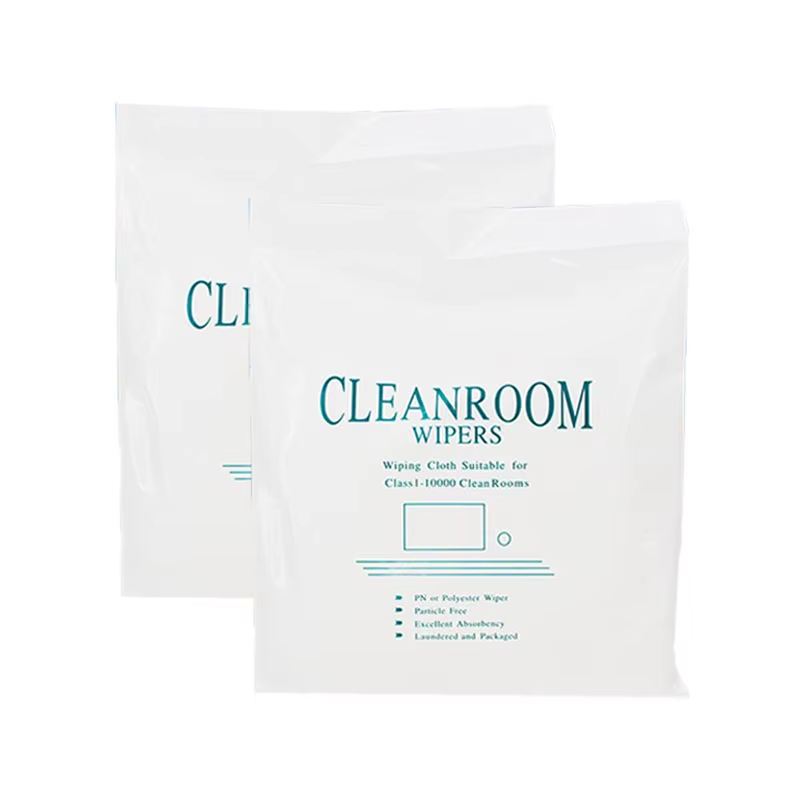
Precision Cleaning Solutions for Controlled Surface Environments
In many industrial and technical environments, surface cleanliness is not a cosmetic concern but a functional requirement. Dust, fibers, and static charge can interfere with product quality, equipment performance, and even safety standards. An Anti-Static Dust-Free Cleaning Cloth has become a critical consumable in settings where ordinary wiping materials fail to meet cleanliness expectations. By combining controlled fiber structure with static-dissipating properties, this type of cleaning cloth supports consistent, repeatable surface cleanliness across sensitive applications.
Understanding the Nature of Surface Contamination
Common Sources of Dust and Particulate Residue
Surface contamination originates from multiple sources, including airborne particles, operator contact, packaging materials, and surrounding equipment. Even in relatively clean environments, microscopic dust can settle on work surfaces and finished products. When wiped with conventional cloths, these particles are often redistributed rather than removed.
An Anti-Static Dust-Free Cleaning Cloth addresses this challenge by capturing and retaining fine particles instead of pushing them across the surface. This capability is especially important in precision manufacturing, electronics assembly, and optical processing where minor residue can cause defects or performance issues.
The Role of Static Electricity in Dust Attraction
Static electricity plays a major role in surface contamination. When surfaces accumulate static charge, they actively attract airborne dust and fibers. Standard cleaning materials can increase static buildup through friction, making surfaces appear clean initially but quickly recontaminated.
An Anti-Static Dust-Free Cleaning Cloth is engineered to reduce static generation during wiping. By dissipating charge instead of amplifying it, the cloth helps maintain surface cleanliness for longer periods and reduces the frequency of re-cleaning.

How Anti-Static Properties Enhance Cleaning Performance
Static Dissipation During Wiping
Anti-static functionality is not an abstract feature; it directly influences cleaning results. During wiping, friction between the cloth and the surface can generate electrostatic charge. An Anti-Static Dust-Free Cleaning Cloth is designed to neutralize this charge through conductive or dissipative fibers.
This static dissipation prevents dust from being re-attracted immediately after cleaning. As a result, surfaces remain cleaner for longer durations, improving efficiency in environments where repeated cleaning disrupts workflow.
Improved Particle Capture and Retention
Beyond static control, the structure of an Anti-Static Dust-Free Cleaning Cloth supports effective particle capture. The fibers are arranged to trap dust within the cloth matrix rather than releasing it back into the air.
This retention is critical when cleaning sensitive surfaces such as screens, lenses, or coated components. Effective capture ensures that contaminants are removed from the environment rather than relocated to adjacent areas.
Dust-Free Fabric Structure and Its Impact
Controlled Fiber Shedding
One of the defining characteristics of an Anti-Static Dust-Free Cleaning Cloth is minimal fiber shedding. Ordinary cloths release lint during use, introducing new contaminants even as they attempt to clean.
Dust-free fabrics are manufactured with controlled weaving or bonding processes that prevent loose fibers. This structure ensures that the cleaning action does not compromise surface integrity, making the cloth suitable for high-cleanliness applications.
Uniform Surface Contact
Uniform contact between the cloth and the surface enhances cleaning consistency. An Anti-Static Dust-Free Cleaning Cloth is designed to maintain even pressure distribution during wiping, reducing streaks and missed areas.
This uniformity supports repeatable cleaning results, which is essential in regulated or quality-controlled environments where consistency matters as much as initial cleanliness.
Application Scenarios Requiring Anti-Static Dust-Free Cleaning
Electronics and Semiconductor Handling
In electronics manufacturing, static discharge and particulate contamination pose serious risks. Circuit boards, displays, and microcomponents are highly sensitive to both dust and electrostatic effects.
Using an Anti-Static Dust-Free Cleaning Cloth helps protect these components during assembly and inspection. The cloth reduces static buildup while removing fine particles that could interfere with electrical performance or visual inspection.
Optical and Precision Surface Maintenance
Optical components such as lenses, screens, and sensors demand exceptional cleanliness. Even minor dust can affect clarity, alignment, or calibration.
An Anti-Static Dust-Free Cleaning Cloth supports gentle yet effective cleaning without scratching surfaces or leaving residue. Its static-dissipating properties further reduce the chance of immediate recontamination after cleaning.
Operational Benefits in Industrial Environments
Reduced Cleaning Frequency and Downtime
When surfaces remain clean for longer, overall cleaning frequency decreases. This reduction translates into less downtime and more stable production schedules.
An Anti-Static Dust-Free Cleaning Cloth contributes to operational efficiency by extending the effective cleanliness window. Teams spend less time repeating cleaning tasks and more time focusing on core operations.
Consistency Across Shifts and Operators
Cleaning results often vary depending on who performs the task and which materials are used. Standardizing on an Anti-Static Dust-Free Cleaning Cloth helps normalize outcomes across different operators and shifts.
This consistency supports quality control efforts and reduces variability in surface condition, which is especially valuable in audited or standardized processes.
Comparison with Conventional Cleaning Materials
Limitations of Ordinary Cloths
Conventional cotton rags or paper wipes are not designed for static control or low-lint performance. They may appear effective on visible dirt but often leave behind fibers and generate static charge.
These limitations become evident in sensitive environments where even invisible residue causes problems. An Anti-Static Dust-Free Cleaning Cloth addresses these shortcomings through purposeful material engineering.
Performance Stability Over Repeated Use
An Anti-Static Dust-Free Cleaning Cloth maintains its performance characteristics over repeated use when handled correctly. Static dissipation and low-shedding properties remain consistent, supporting predictable results.
In contrast, ordinary cloths degrade quickly, shedding more fibers and losing effectiveness. Performance stability is a key advantage for environments requiring reliable cleaning outcomes.
Supporting Cleanroom and Controlled Area Standards
Alignment with Cleanliness Protocols
Many controlled environments operate under strict cleanliness protocols. Cleaning materials must not introduce contaminants or interfere with environmental controls.
An Anti-Static Dust-Free Cleaning Cloth aligns with these requirements by minimizing particle release and controlling static. This makes it suitable for use in cleanrooms, laboratories, and controlled production areas.
Contribution to Overall Contamination Control
Surface cleaning is only one part of contamination control, but it plays a visible and measurable role. Effective wiping reduces the load on air filtration systems and lowers overall particulate levels.
By using an Anti-Static Dust-Free Cleaning Cloth, facilities strengthen their contamination control strategy and support broader cleanliness objectives.
Handling and Usage Considerations
Proper Wiping Techniques
Technique influences results. Gentle, consistent wiping allows the Anti-Static Dust-Free Cleaning Cloth to capture particles without generating unnecessary friction.
Folding the cloth to expose clean surfaces during use further improves effectiveness. This approach maximizes particle retention and avoids redistributing contaminants.
Storage and Reuse Practices
Proper storage preserves cloth performance. Keeping Anti-Static Dust-Free Cleaning Cloths in clean, sealed containers prevents secondary contamination.
When reuse is permitted, appropriate laundering or cleaning methods help maintain anti-static and dust-free properties. Clear handling guidelines ensure long-term performance consistency.
Environmental and Cost Efficiency Factors
Reduced Waste from Repeat Cleaning
Because surfaces stay clean longer, fewer cleaning cycles are required. This reduction lowers overall material consumption and labor input.
An Anti-Static Dust-Free Cleaning Cloth supports more efficient resource use, which benefits both operational budgets and environmental goals.
Long-Term Value in Quality-Critical Operations
While specialized cloths may have higher upfront costs, their performance reduces indirect expenses caused by defects, rework, or downtime.
In quality-critical operations, the long-term value of an Anti-Static Dust-Free Cleaning Cloth often outweighs initial procurement considerations.
Integration into Standard Operating Procedures
Standardizing Cleaning Materials
Standardization simplifies training and quality assurance. When teams rely on a defined Anti-Static Dust-Free Cleaning Cloth, expectations and results align more easily.
Clear specification of cleaning materials within procedures reduces ambiguity and supports compliance with internal and external standards.
Supporting Training and Quality Control
Using consistent materials enables more effective training. Operators learn how the Anti-Static Dust-Free Cleaning Cloth behaves and how to achieve optimal results.
Quality control teams benefit from predictable cleaning outcomes, making it easier to identify process-related issues rather than material-related variability.
FAQ
Anti-Static Dust-Free Cleaning Cloth Usage Frequency
Usage frequency depends on environmental conditions and contamination levels. Because static is controlled, surfaces often remain clean longer, reducing the need for frequent wiping.
Suitability for Sensitive Coated Surfaces
An Anti-Static Dust-Free Cleaning Cloth is suitable for delicate coatings when used with appropriate technique. Its low-lint structure helps protect surface finishes.
Table of Contents
- Precision Cleaning Solutions for Controlled Surface Environments
- Understanding the Nature of Surface Contamination
- How Anti-Static Properties Enhance Cleaning Performance
- Dust-Free Fabric Structure and Its Impact
- Application Scenarios Requiring Anti-Static Dust-Free Cleaning
- Operational Benefits in Industrial Environments
- Comparison with Conventional Cleaning Materials
- Supporting Cleanroom and Controlled Area Standards
- Handling and Usage Considerations
- Environmental and Cost Efficiency Factors
- Integration into Standard Operating Procedures
- FAQ