
 EN
EN



Precision Cleaning Standards in Controlled Environments
In electronics manufacturing, semiconductor fabrication, medical device assembly, and pharmaceutical production, contamination control is a foundational requirement rather than an operational detail. Among the many consumables used in these environments, Esd Cleanroom Wipers play a critical role in maintaining surface cleanliness while preventing electrostatic discharge risks. High-quality Esd Cleanroom Wipers are not simply wiping materials; they are engineered tools designed to support process stability, product yield, and regulatory compliance across sensitive cleanroom operations.
Understanding the Functional Purpose of Esd Cleanroom Wipers
Contamination Control in Sensitive Processes
Esd Cleanroom Wipers are specifically designed to remove particles, residues, and contaminants without introducing new sources of pollution. In controlled environments, even microscopic fibers or particles can compromise product integrity. High-quality Esd Cleanroom Wipers are manufactured to minimize particle generation during use, ensuring that surfaces remain within strict cleanliness thresholds.
These wipers are commonly used on workstations, equipment housings, tools, and delicate components. Their ability to clean effectively while maintaining low particle release is essential for consistent production outcomes in cleanroom environments.
Electrostatic Discharge Risk Management
Electrostatic discharge is a silent but significant threat in electronics and precision manufacturing. Esd Cleanroom Wipers are engineered to dissipate static charges safely, reducing the risk of damage to sensitive components. Without proper ESD control, static buildup during wiping can result in component failure, yield loss, or latent defects.
High-quality Esd Cleanroom Wipers integrate conductive or dissipative properties that allow charges to flow safely away. This dual function of cleaning and static control distinguishes them from standard cleanroom wipes.
Material Composition and Fabric Structure
Fiber Selection and Material Purity
Material selection is one of the most important factors distinguishing high-quality Esd Cleanroom Wipers. Polyester, microfiber, and blended synthetic fibers are commonly used due to their low lint characteristics and chemical resistance. The purity of these fibers directly affects particle release and compatibility with cleanroom standards.
High-grade Esd Cleanroom Wipers are produced using carefully controlled raw materials, ensuring minimal extractables and consistent performance. Impurities in fibers can lead to residue transfer or chemical interactions during wiping, which is unacceptable in regulated environments.
Weaving and Knitting Techniques
Fabric structure influences wiping efficiency and durability. Knitted structures often provide better strength and flexibility, while woven structures offer tighter surfaces for fine cleaning tasks. High-quality Esd Cleanroom Wipers use optimized fabric constructions to balance absorbency, strength, and low particle shedding.
The consistency of the fabric weave or knit ensures uniform performance across each wiper. This uniformity is essential when cleaning large surface areas or repeating processes across multiple shifts.

ESD Performance Characteristics
Surface Resistivity and Charge Dissipation
Effective ESD control requires precise surface resistivity levels. High-quality Esd Cleanroom Wipers are engineered to maintain stable resistivity that allows static charges to dissipate gradually rather than discharge abruptly. This controlled dissipation protects sensitive components and maintains process safety.
Consistent resistivity across the entire wiper surface is critical. Variations can lead to uneven static behavior, undermining the protective function of the wiper during cleaning operations.
Integration with ESD-Controlled Environments
Esd Cleanroom Wipers must function as part of a broader ESD control system. This includes compatibility with grounded workstations, ESD flooring, and personnel grounding protocols. High-quality wipers are designed to complement these systems rather than disrupt them.
When used correctly, Esd Cleanroom Wipers support a holistic approach to static management, reinforcing overall environmental control strategies.
Cleanroom Compatibility and Classification
Cleanroom Class Requirements
Different industries operate under varying cleanroom classifications, from ISO Class 3 to ISO Class 8. High-quality Esd Cleanroom Wipers are manufactured and packaged to meet specific cleanliness levels appropriate for their intended use.
Production processes such as ultrasonic cutting, laser sealing, or edge sealing are often employed to reduce fiber release. These techniques ensure that the wipers maintain integrity even under repeated use.
Packaging and Handling Standards
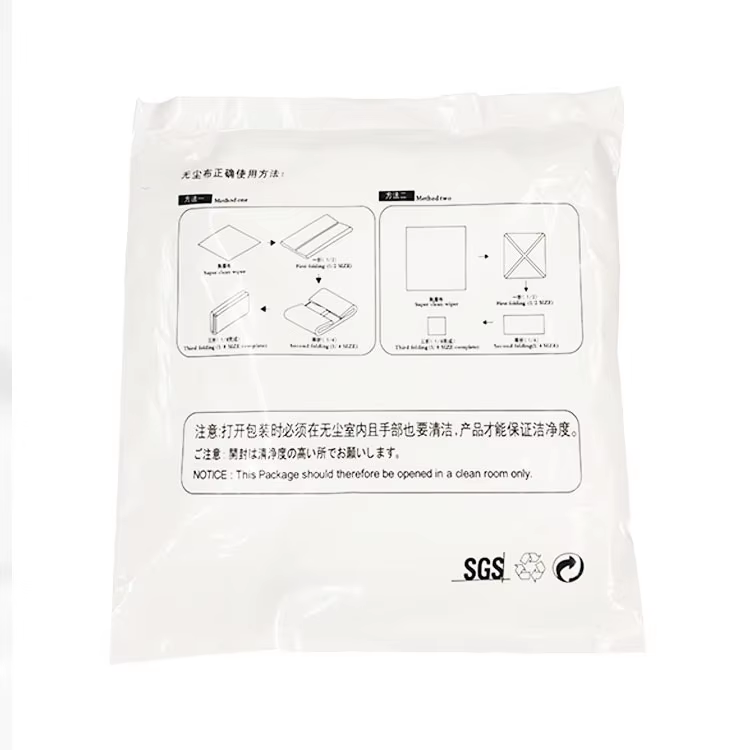
Packaging plays a crucial role in maintaining cleanliness prior to use. High-quality Esd Cleanroom Wipers are packaged in cleanroom-compatible materials and sealed to prevent contamination during transport and storage.
Proper labeling and lot traceability further support quality assurance and compliance requirements. This attention to packaging detail ensures that the wipers arrive ready for immediate cleanroom use.
Absorbency and Cleaning Efficiency
Liquid Absorption Performance
Absorbency determines how effectively Esd Cleanroom Wipers handle solvents, cleaning agents, and spills. High-quality wipers are designed to absorb liquids efficiently without dripping or smearing contaminants across surfaces.
Balanced absorbency ensures that the wiper holds contaminants securely until disposal. Excessively absorbent materials may release fibers, while insufficient absorbency reduces cleaning effectiveness.
Residue and Streak Control
Residue control is critical when cleaning optical components, polished surfaces, or sensitive equipment. High-quality Esd Cleanroom Wipers leave minimal streaks or residues after use, supporting high-precision cleaning requirements.
This performance is achieved through controlled fiber structure and surface finish. Consistent results reduce the need for re-cleaning and improve operational efficiency.
Chemical Compatibility and Durability
Resistance to Common Cleanroom Solvents
Esd Cleanroom Wipers are often used with solvents such as isopropyl alcohol, ethanol, or specialized cleaning solutions. High-quality wipers maintain structural integrity when exposed to these chemicals, preventing breakdown or fiber shedding.
Chemical resistance ensures that the wiper performs consistently throughout the cleaning process. Inferior materials may degrade, releasing particles or residues that compromise cleanliness.
Mechanical Strength and Tear Resistance
Durability matters in repetitive cleaning tasks. High-quality Esd Cleanroom Wipers offer sufficient tensile strength to withstand folding, wiping pressure, and extended use without tearing.
Strong mechanical performance reduces consumption rates and supports cost efficiency. Wipers that tear easily increase waste and disrupt workflow.
Manufacturing Quality Control
Process Consistency and Inspection
Manufacturing consistency is a defining feature of high-quality Esd Cleanroom Wipers. Controlled production environments, standardized processes, and routine inspections ensure that each batch meets defined specifications.
Quality control measures often include particle testing, absorbency testing, and ESD performance verification. These checks provide confidence in product reliability and repeatability.
Traceability and Documentation
Traceability supports accountability and compliance. High-quality Esd Cleanroom Wipers are supplied with clear documentation, including lot numbers and production records.
This transparency is valuable in regulated industries where audit readiness and process validation are essential. Reliable documentation strengthens trust between suppliers and end users.
Application-Specific Design Considerations
Electronics and Semiconductor Manufacturing
In electronics manufacturing, Esd Cleanroom Wipers must balance fine cleaning with robust static control. Sensitive components require gentle contact while remaining protected from electrostatic damage.
High-quality wipers support these requirements by offering smooth surfaces, controlled resistivity, and low particle release, enabling safe and effective cleaning operations.
Medical and Pharmaceutical Environments
Medical and pharmaceutical cleanrooms demand strict contamination control. Esd Cleanroom Wipers used in these settings must meet hygiene, cleanliness, and material compatibility standards.
Consistency and reliability are critical, as cleaning processes directly affect product safety and compliance. High-quality wipers support validated cleaning protocols and documentation requirements.
Operational Efficiency and Cost Control
Reducing Process Variability
Reliable Esd Cleanroom Wipers reduce variability in cleaning outcomes. Consistent performance supports standardized procedures and predictable results across shifts and operators.
Reduced variability improves overall process stability and lowers the risk of contamination-related defects or rework.
Long-Term Value Considerations
While unit cost is a factor, long-term value is defined by performance, durability, and reliability. High-quality Esd Cleanroom Wipers often result in lower overall consumption and fewer process disruptions.
This long-term perspective aligns with quality-focused manufacturing strategies and supports sustainable operational efficiency.
Integration into Cleanroom Protocols
Standard Operating Procedures
Effective use of Esd Cleanroom Wipers depends on clear procedures. High-quality wipers are designed to integrate smoothly into existing cleaning protocols, supporting repeatable and compliant practices.
Training and proper usage ensure that the full benefits of the wipers are realized, reinforcing cleanroom discipline.
Disposal and Waste Management
Proper disposal is part of contamination control. High-quality Esd Cleanroom Wipers maintain integrity until disposal, reducing the risk of particle release during handling.
Clear disposal procedures support environmental control and regulatory compliance within cleanroom operations.
Table of Contents
- Precision Cleaning Standards in Controlled Environments
- Understanding the Functional Purpose of Esd Cleanroom Wipers
- Material Composition and Fabric Structure
- ESD Performance Characteristics
- Cleanroom Compatibility and Classification
- Absorbency and Cleaning Efficiency
- Chemical Compatibility and Durability
- Manufacturing Quality Control
- Application-Specific Design Considerations
- Operational Efficiency and Cost Control
- Integration into Cleanroom Protocols