
 EN
EN



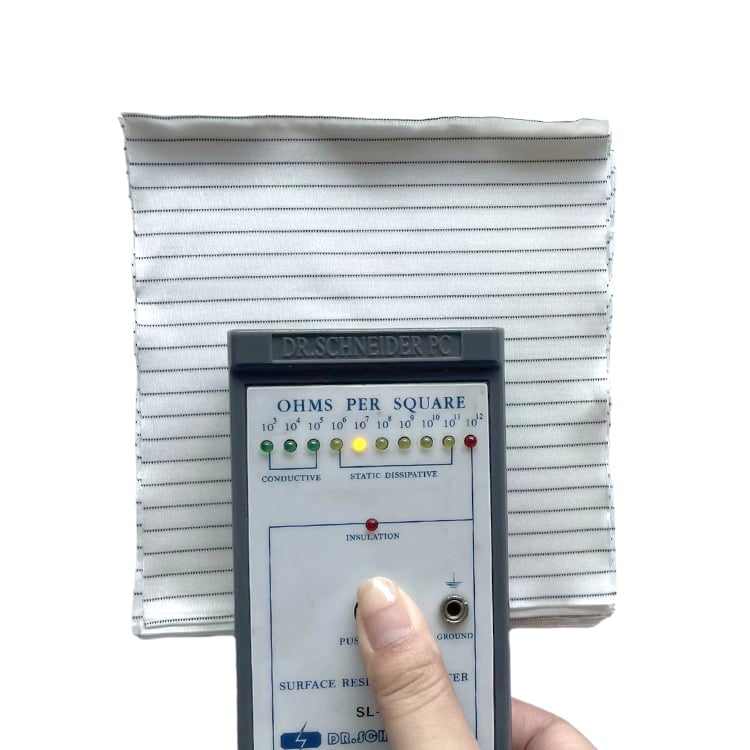
In today's advanced manufacturing and research facilities, maintaining contamination-free environments is critical for product quality and operational success. An esd cleanroom wiper serves as an essential tool for protecting sensitive electronic components and delicate surfaces from electrostatic discharge while ensuring thorough cleaning performance. These specialized cleaning solutions combine antistatic properties with superior absorbency, making them indispensable in semiconductor fabrication, pharmaceutical manufacturing, and precision assembly operations where even microscopic particles can compromise product integrity.

The integration of electrostatic discharge protection with high-performance cleaning capabilities represents a significant advancement in contamination control technology. Industries operating in Class 10 to Class 100,000 cleanroom environments rely heavily on these specialized wipers to maintain strict cleanliness standards while preventing static buildup that could damage sensitive electronic assemblies. Understanding the unique properties and applications of esd cleanroom wiper technology enables facility managers to implement more effective cleaning protocols and protect valuable equipment investments.
Understanding ESD Protection in Cleanroom Applications
Fundamentals of Electrostatic Discharge Control
Electrostatic discharge occurs when accumulated static electricity transfers rapidly between surfaces with different electrical potentials, potentially generating thousands of volts that can permanently damage sensitive electronic components. In cleanroom environments, traditional cleaning materials often generate static charges through friction, creating an invisible threat to microprocessors, circuit boards, and optical devices. An esd cleanroom wiper addresses this challenge by incorporating conductive or dissipative fibers that safely channel static electricity away from critical surfaces, preventing damage while maintaining effective cleaning performance.
The science behind ESD protection involves creating controlled pathways for electrical charges to dissipate gradually rather than building up to dangerous levels. Modern esd cleanroom wiper designs utilize specialized synthetic fibers treated with antistatic agents or woven with conductive threads that provide consistent electrical properties throughout the product lifecycle. This engineering approach ensures that cleaning operations enhance rather than compromise the electrostatic safety of sensitive work environments.
Material Science and Fiber Technology
The construction of an effective esd cleanroom wiper requires careful selection of base materials that balance cleaning performance with electrical conductivity properties. Polyester microfibers treated with permanent antistatic coatings provide excellent durability and washing resistance, while maintaining the soft texture necessary for delicate surface cleaning. Some advanced formulations incorporate carbon fibers or metallic threads woven directly into the fabric structure, creating inherent conductivity that cannot be removed through repeated laundering cycles.
Manufacturing processes for premium esd cleanroom wiper products involve precise control of fiber density, weave patterns, and edge finishing techniques to minimize particle generation during use. Laser-cut edges eliminate loose threads that could contaminate sensitive surfaces, while specialized knitting patterns optimize fluid absorption while maintaining structural integrity. These technical considerations ensure that each wiper performs consistently across thousands of cleaning cycles without degrading electrical or physical properties.
Applications Across Critical Industries
Semiconductor Manufacturing Requirements
Semiconductor fabrication facilities represent one of the most demanding applications for esd cleanroom wiper technology, where nanometer-scale particles can render entire wafer batches unusable. Production lines processing silicon wafers, photomasks, and integrated circuits require cleaning solutions that remove contaminants without introducing static charges that could attract additional particles or damage delicate circuit patterns. The combination of particle-free construction and electrical safety makes specialized wipers essential for maintaining yield rates in these high-value manufacturing processes.
Clean room protocols in semiconductor facilities typically specify the exact electrical resistance ranges acceptable for cleaning materials, often requiring surface resistivity between 10^6 and 10^9 ohms per square to ensure proper static dissipation. An esd cleanroom wiper meeting these specifications enables technicians to safely clean wafer handling equipment, inspection stations, and assembly fixtures without compromising product quality or equipment functionality.
Pharmaceutical and Biotechnology Operations
Pharmaceutical manufacturing and biotechnology research facilities utilize esd cleanroom wiper solutions to maintain sterile conditions while protecting sensitive analytical equipment from static-related malfunctions. Laboratory instruments such as precision balances, spectrometers, and automated dispensing systems can experience measurement errors or component damage when exposed to electrostatic discharges during routine cleaning procedures. The dual protection offered by antistatic wipers ensures both microbial contamination control and equipment reliability in these critical applications.
Validation requirements in pharmaceutical environments demand extensive documentation of cleaning material properties, including particle generation rates, chemical compatibility, and electrical characteristics. High-quality esd cleanroom wiper products undergo rigorous testing to demonstrate compliance with FDA guidelines and international pharmaceutical manufacturing standards. This documentation trail provides quality assurance managers with the confidence needed to incorporate these specialized cleaning tools into validated cleaning procedures.
Performance Characteristics and Technical Specifications
Absorption and Cleaning Efficiency
The effectiveness of an esd cleanroom wiper depends heavily on its ability to absorb liquids quickly while trapping particles within the fiber structure rather than redistributing them across surfaces. Microfiber technology enables these wipers to capture particles significantly smaller than the individual fiber diameter through electrostatic attraction and mechanical entrapment. Advanced weaving techniques create capillary spaces that draw cleaning solvents deep into the fabric, allowing thorough removal of oils, residues, and microscopic contaminants from critical surfaces.
Testing protocols for absorption capacity typically measure both initial uptake rates and total fluid retention under standardized conditions, ensuring consistent performance across production batches. Premium esd cleanroom wiper products can absorb up to eight times their dry weight in isopropanol or deionized water while maintaining structural integrity and electrical properties. This high capacity reduces the number of wipers needed for each cleaning task, improving operational efficiency and reducing waste generation in controlled environments.
Durability and Laundering Performance
Cost-effective operation of cleanroom facilities requires cleaning materials that maintain performance characteristics through multiple use cycles without degrading cleanliness standards. Washable esd cleanroom wiper designs undergo extensive testing to validate electrical properties, particle generation rates, and absorption capacity after repeated laundering in validated cleaning processes. Proper washing procedures using deionized water and compatible detergents can extend service life to hundreds of cleaning cycles while preserving antistatic functionality.
Quality control measures for reusable wipers include periodic testing of electrical resistance, particle count analysis, and visual inspection for signs of fiber degradation or contamination. Facilities implementing comprehensive wiper management programs can achieve significant cost savings compared to disposable alternatives while maintaining the highest cleanliness standards. The environmental benefits of reduced waste generation align with corporate sustainability initiatives while supporting operational excellence in sensitive manufacturing environments.
Selection Criteria and Best Practices
Matching Wiper Properties to Application Requirements
Selecting the optimal esd cleanroom wiper for specific applications requires careful evaluation of multiple performance factors including particle generation characteristics, chemical compatibility, and electrical properties. Different cleanroom classes impose varying requirements for particle size limits and acceptable contamination levels, necessitating wipers with correspondingly sophisticated filtration and retention capabilities. Class 10 environments may require wipers with particle generation rates below 0.1 particles per square centimeter, while Class 1000 applications can accommodate higher particle levels without compromising process outcomes.
Chemical compatibility considerations become critical when cleaning solvents, acids, or specialized process chemicals are involved in routine maintenance procedures. The fabric construction and fiber treatments used in esd cleanroom wiper manufacturing must resist degradation from repeated exposure to these aggressive chemicals while maintaining electrical and physical properties. Compatibility matrices provided by reputable manufacturers enable facility managers to select appropriate products for specific chemical environments and cleaning protocols.
Implementation and Training Considerations
Successful deployment of esd cleanroom wiper technology requires comprehensive training programs that educate personnel on proper handling, storage, and usage techniques to maximize performance and safety benefits. Training modules should cover the relationship between cleaning technique and static generation, proper wiper folding methods to maximize surface contact, and recognition of signs indicating when wipers should be replaced or laundered. Understanding these operational details ensures that the full benefits of advanced wiper technology translate into measurable improvements in contamination control and equipment protection.
Storage and handling procedures play crucial roles in maintaining the integrity of esd cleanroom wiper products before use, particularly for materials that rely on moisture-sensitive antistatic treatments. Proper packaging, environmental controls, and inventory rotation practices prevent degradation of electrical properties and ensure consistent performance throughout the product lifecycle. These operational considerations represent essential elements of comprehensive contamination control strategies in modern cleanroom facilities.
FAQ
How do ESD cleanroom wipers differ from regular microfiber cloths
ESD cleanroom wipers incorporate specialized conductive or dissipative fibers that prevent static electricity buildup during cleaning operations, while regular microfiber cloths can generate significant static charges through friction. The manufacturing processes for cleanroom wipers also include additional steps to minimize particle generation, such as laser-cut edges and validated washing procedures, making them suitable for controlled environments where contamination control is critical.
What electrical resistance range is optimal for cleanroom applications
Most cleanroom applications require esd cleanroom wiper products with surface resistivity between 10^6 and 10^9 ohms per square to ensure proper static dissipation without creating electrical safety hazards. This resistance range allows accumulated charges to dissipate gradually while preventing the rapid discharge events that can damage sensitive electronic components or attract airborne particles to cleaned surfaces.
Can ESD wipers be safely laundered and reused multiple times
High-quality esd cleanroom wiper products are designed for multiple laundering cycles using validated cleaning procedures with deionized water and compatible detergents. Proper washing techniques can maintain antistatic properties and cleanliness standards for hundreds of use cycles, though periodic testing of electrical resistance and particle generation rates is recommended to ensure continued performance compliance with facility requirements.
What cleaning solvents are compatible with ESD cleanroom wipers
Most esd cleanroom wiper materials demonstrate excellent compatibility with common cleaning solvents including isopropanol, acetone, methanol, and deionized water, though specific chemical resistance varies depending on fiber construction and treatment methods. Manufacturers typically provide detailed compatibility matrices that specify approved solvents and concentration limits to prevent degradation of electrical or physical properties during use.