
 EN
EN



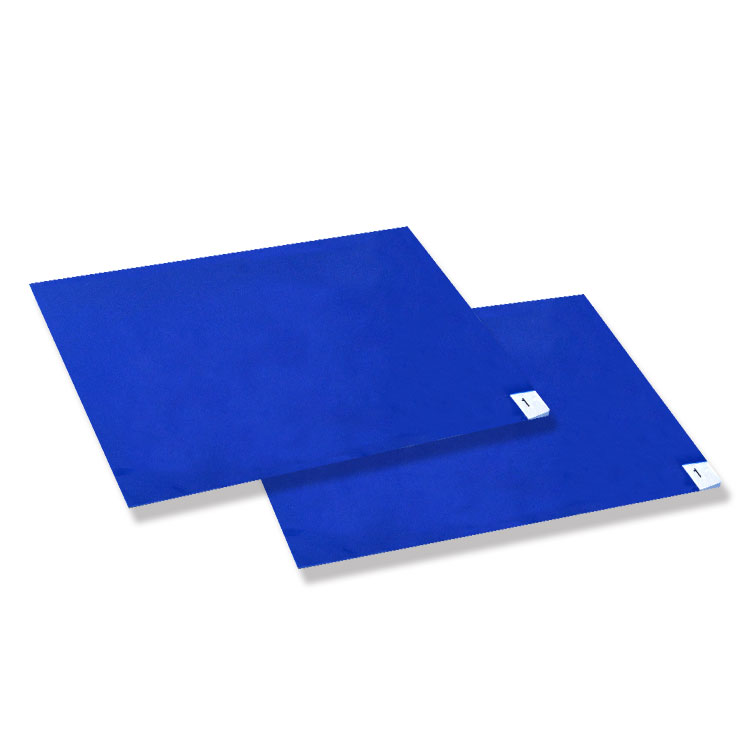
Cleanroom environments demand the highest standards of contamination control, where even microscopic particles can compromise sensitive manufacturing processes. In these critical spaces, the choice of cleaning materials becomes paramount to maintaining operational integrity. An Anti-Static Dust-Free Cleaning Cloth serves as an essential tool for facilities requiring pristine conditions, from semiconductor manufacturing to pharmaceutical production. These specialized textiles combine advanced material science with precise engineering to deliver unparalleled cleaning performance while preventing static discharge that could damage sensitive electronic components.
Material Composition and Fiber Technology
Advanced Polyester Construction
The foundation of any effective Anti-Static Dust-Free Cleaning Cloth lies in its material composition, with 100% polyester fibers representing the gold standard for cleanroom applications. This synthetic polymer offers exceptional durability while maintaining consistent performance across multiple cleaning cycles. Unlike natural fibers that shed particles and degrade over time, polyester construction ensures minimal particle generation during use. The molecular structure of polyester provides inherent resistance to chemical degradation, making these cloths suitable for use with various cleaning solvents and disinfectants commonly employed in controlled environments.
Manufacturing processes for high-grade polyester cleaning cloths involve precise fiber denier control, typically ranging from 0.1 to 0.3 denier per filament. This ultra-fine fiber structure creates an enormous surface area for particle capture while maintaining the strength necessary for rigorous cleaning applications. The continuous filament construction eliminates weak points where fiber breaks might occur, further reducing the risk of contamination through shed particles.
Integrated Anti-Static Properties
Static electricity poses a significant threat in cleanroom environments, particularly in electronics manufacturing where electrostatic discharge can destroy sensitive components worth thousands of dollars. An effective Anti-Static Dust-Free Cleaning Cloth incorporates conductive fibers or treatments that dissipate static charges safely. Carbon fiber integration represents one approach, where microscopic carbon filaments woven into the polyester matrix provide a controlled path for static discharge.
Alternative anti-static treatments involve topical applications of conductive polymers or metallic compounds that create a permanent charge-dissipative surface. These treatments must maintain their effectiveness through repeated laundering cycles while avoiding any particle shedding that could compromise cleanroom standards. The resistance characteristics typically fall within the range of 10^6 to 10^9 ohms per square, providing sufficient conductivity to prevent static buildup without creating safety hazards.

Edge Treatment and Sealing Technologies
Laser Edge Sealing Advantages
Traditional cutting methods for textile manufacturing often leave loose fibers along cloth edges, creating potential contamination sources in cleanroom applications. Laser edge sealing technology revolutionizes Anti-Static Dust-Free Cleaning Cloth production by creating perfectly sealed edges that eliminate fiber shedding. The laser cutting process melts and fuses polyester fibers at the molecular level, creating a smooth, particle-free edge that maintains structural integrity throughout the cloth's service life.
The precision of laser cutting allows manufacturers to achieve tolerances within 0.1mm, ensuring consistent dimensions across production batches. This uniformity becomes crucial for automated cleaning systems where cloth dimensions must match equipment specifications exactly. The sealed edges also prevent fraying during washing and sterilization procedures, extending the operational lifespan of each cloth while maintaining cleanroom compliance standards.
Ultrasonic Welding Applications
Some manufacturers employ ultrasonic welding technology as an alternative to laser sealing, using high-frequency sound waves to create molecular bonds along cloth edges. This process generates no heat-affected zones that might compromise fiber structure, making it particularly suitable for delicate polyester blends. Ultrasonic sealing creates edges that are both particle-free and chemically inert, essential characteristics for pharmaceutical and biotechnology applications where chemical compatibility becomes critical.
The ultrasonic process also enables the creation of complex edge profiles and reinforced stress points without additional materials or adhesives. This capability allows manufacturers to optimize cloth design for specific applications, such as creating reinforced corners for manual cleaning tasks or incorporating hanging loops for automated systems.
Particle Filtration and Capture Efficiency
Microfiber Structure Performance
The particle capture efficiency of an Anti-Static Dust-Free Cleaning Cloth depends heavily on its microfiber structure and surface characteristics. Ultra-fine polyester fibers create millions of microscopic spaces between filaments, forming an effective filtration matrix that captures particles ranging from visible debris down to sub-micron contaminants. The electrostatic properties of polyester naturally attract and hold charged particles, enhancing capture efficiency beyond simple mechanical filtration.
Research indicates that properly engineered microfiber cloths can achieve particle capture rates exceeding 99.9% for particles larger than 0.3 microns, making them suitable for ISO Class 5 cleanroom applications and higher. The three-dimensional fiber structure creates multiple contact points with surfaces being cleaned, ensuring thorough contaminant removal even from textured or irregular surfaces commonly found in manufacturing equipment.
Liquid Absorption Characteristics
Beyond dry particle removal, Anti-Static Dust-Free Cleaning Cloth products must demonstrate exceptional liquid absorption and retention capabilities. The capillary action created by ultra-fine fiber spacing allows these cloths to absorb liquids rapidly while preventing recontamination through dripping or spreading. Absorption capacity typically ranges from 3 to 8 times the cloth's dry weight, depending on fiber density and construction method.
The hydrophilic nature of treated polyester fibers enhances water-based cleaning solution pickup, while the chemical resistance of the base polymer allows use with various organic solvents commonly employed in cleanroom maintenance. This versatility enables single-cloth solutions for diverse cleaning challenges, reducing inventory complexity and potential cross-contamination risks associated with multiple cleaning materials.
Classification Standards and Compliance
ISO Cleanroom Classifications
International Organization for Standardization cleanroom standards define specific particle count limits that directly impact Anti-Static Dust-Free Cleaning Cloth selection criteria. ISO 14644 standards classify cleanrooms based on maximum allowable particle concentrations, with Class 5 environments permitting no more than 3,520 particles of 0.5 microns or larger per cubic meter of air. Cleaning cloths used in these environments must not contribute additional particles during use or storage.
Testing protocols for cleanroom-compatible cloths involve particle generation assessments under controlled conditions, simulating actual use scenarios. These evaluations measure both initial particle shedding and long-term performance degradation to ensure sustained compliance throughout the cloth's service life. Manufacturers must provide comprehensive certification documentation demonstrating compliance with relevant ISO standards for specific cleanroom classifications.
Federal Standard 209E Requirements
Although superseded by ISO standards in many regions, Federal Standard 209E continues to influence cleanroom design and operation in certain industries, particularly aerospace and defense applications. This standard establishes particle count limits expressed as particles per cubic foot, with Class 100 environments allowing no more than 100 particles of 0.5 microns or larger per cubic foot. Anti-Static Dust-Free Cleaning Cloth products intended for these applications must meet even more stringent particle generation requirements.
Compliance testing under Federal Standard 209E typically involves extended use simulations where cloths undergo repeated cleaning cycles while monitoring particle generation rates. The results help establish recommended replacement intervals and usage protocols that maintain environmental compliance throughout operational periods.
Manufacturing Process Quality Control
Contamination Prevention Protocols
The production environment for Anti-Static Dust-Free Cleaning Cloth manufacturing must itself meet cleanroom standards to prevent contamination during the fabrication process. Manufacturing facilities typically operate under ISO Class 7 or better conditions, with controlled air filtration, personnel protocols, and equipment sterilization procedures. Raw material handling requires specialized procedures to prevent contamination introduction during fiber processing and weaving operations.
Quality control checkpoints throughout the manufacturing process include particle generation testing at multiple stages, from initial fiber preparation through final packaging. Automated inspection systems using laser particle counters monitor production lines continuously, triggering immediate corrective actions when particle generation exceeds predetermined thresholds. This real-time monitoring ensures consistent product quality while minimizing waste associated with non-compliant production runs.
Sterilization and Packaging Standards
Post-production sterilization procedures for Anti-Static Dust-Free Cleaning Cloth products typically employ gamma radiation or ethylene oxide treatment to eliminate microbial contamination without compromising material properties. Gamma sterilization offers the advantage of penetrating sealed packaging, allowing final sterilization after packaging completion. The process parameters must be carefully controlled to prevent polymer degradation while achieving the required sterility assurance level.
Packaging materials themselves must meet cleanroom compatibility standards, with many manufacturers employing multi-layer barrier films that prevent contamination ingress while maintaining material integrity during storage and transportation. Vacuum packaging or inert gas flushing may be employed for products requiring extended shelf life or protection from atmospheric moisture that could affect anti-static properties.
Application-Specific Performance Features
Electronics Manufacturing Applications
Electronics manufacturing environments present unique challenges for Anti-Static Dust-Free Cleaning Cloth applications, combining the need for particle-free cleaning with protection against electrostatic discharge damage. Semiconductor fabrication facilities require cloths that can safely clean delicate wafer surfaces without scratching while dissipating any static charges that might accumulate during the cleaning process. The cloth surface finish becomes critical, typically requiring a smooth, non-abrasive texture that won't damage microscopic circuit features.
PCB assembly operations benefit from cloths that can remove flux residues and other organic contaminants while maintaining anti-static protection for sensitive components. The chemical compatibility of the cloth material with various cleaning solvents used in electronics manufacturing becomes essential, as residual chemicals could interfere with subsequent assembly processes or long-term component reliability.
Pharmaceutical and Biotechnology Uses
Pharmaceutical manufacturing environments impose additional requirements on Anti-Static Dust-Free Cleaning Cloth performance, particularly regarding extractable substances that could contaminate drug products. USP Class VI testing protocols evaluate material biocompatibility and potential for leachable compounds that might affect pharmaceutical product quality. These evaluations include cytotoxicity assessments and chemical extraction studies under various temperature and solvent conditions.
Biotechnology applications often require cloths compatible with aggressive disinfectants such as quaternary ammonium compounds, alcohols, and oxidizing agents used for bioburden control. The cloth material must maintain its structural integrity and anti-static properties after repeated exposure to these chemicals while avoiding any absorption that might create contamination reservoirs between cleaning cycles.
Maintenance and Lifecycle Management
Laundering Protocols and Validation
Proper maintenance of Anti-Static Dust-Free Cleaning Cloth inventory requires validated laundering protocols that maintain performance characteristics while extending service life. Commercial laundering facilities specializing in cleanroom textiles employ deionized water systems and particle-free detergents to prevent contamination introduction during washing cycles. Temperature and agitation parameters must be carefully controlled to avoid damaging anti-static treatments or causing fiber degradation.
Validation studies for laundering protocols typically involve testing cloth performance before and after specified numbers of wash cycles, measuring parameters such as particle generation, liquid absorption capacity, and static dissipation effectiveness. These studies establish maximum laundry cycle limits and help identify performance degradation patterns that indicate when cloth replacement becomes necessary.
Storage and Inventory Control
Proper storage conditions for Anti-Static Dust-Free Cleaning Cloth inventory help maintain performance characteristics and prevent contamination during storage periods. Climate-controlled environments with filtered air circulation prevent moisture accumulation that could compromise anti-static properties while avoiding temperature extremes that might affect material integrity. Inventory rotation protocols ensure that older stock is used first, preventing degradation associated with extended storage periods.
Packaging integrity monitoring becomes crucial for maintaining cleanroom compatibility, with regular inspection protocols checking for damage that might allow contamination ingress. Automated inventory systems can track individual lot numbers and expiration dates, ensuring compliance with facility quality management systems and regulatory requirements.
FAQ
How long do anti-static properties typically last in cleanroom cloths?
The durability of anti-static properties in an Anti-Static Dust-Free Cleaning Cloth depends on the treatment method and usage conditions. Integrated conductive fibers provide the longest-lasting performance, often maintaining effectiveness for 100-200 laundry cycles or more. Topical anti-static treatments may require renewal after 50-75 wash cycles, depending on the specific chemistry and laundering protocols used. Regular testing with surface resistance meters helps monitor anti-static performance degradation and establish optimal replacement schedules.
What is the difference between Class 10 and Class 100 cleanroom cloth requirements?
Class 10 cleanrooms (ISO Class 4) require Anti-Static Dust-Free Cleaning Cloth products with significantly lower particle generation rates compared to Class 100 (ISO Class 5) environments. Class 10 compatible cloths typically generate fewer than 10 particles per square meter when tested under standardized conditions, while Class 100 cloths may generate up to 100 particles per square meter. The manufacturing tolerances, edge sealing requirements, and quality control protocols become progressively more stringent as cleanroom classifications become more demanding.
Can these cloths be used with all types of cleaning solvents?
While Anti-Static Dust-Free Cleaning Cloth products made from polyester demonstrate excellent chemical compatibility with most common cleaning solvents, compatibility testing should be performed for specific applications. Most cloths handle alcohols, acetone, and mild acids without degradation, but strong bases or oxidizing agents may affect anti-static treatments or fiber integrity. Manufacturers typically provide chemical compatibility charts listing approved solvents and any restrictions for maintaining optimal performance characteristics.
What testing methods verify anti-static effectiveness in cleanroom environments?
Anti-static effectiveness testing for Anti-Static Dust-Free Cleaning Cloth products typically follows ASTM D257 or ESD Association standards, measuring surface and volume resistance using standardized test fixtures and environmental conditions. Static decay time measurements evaluate how quickly accumulated charges dissipate, with acceptable performance typically requiring decay from 5000V to 500V within 2 seconds or less. Field verification may involve portable resistance meters or static field meters to monitor performance in actual use conditions and establish replacement criteria based on measurable performance degradation.